

Portrait
Window Reflection Portrait Studies
An editorial portrait prompt using controlled reflections to add context without losing facial clarity or human presence.
Featured real result
What this prompt produced
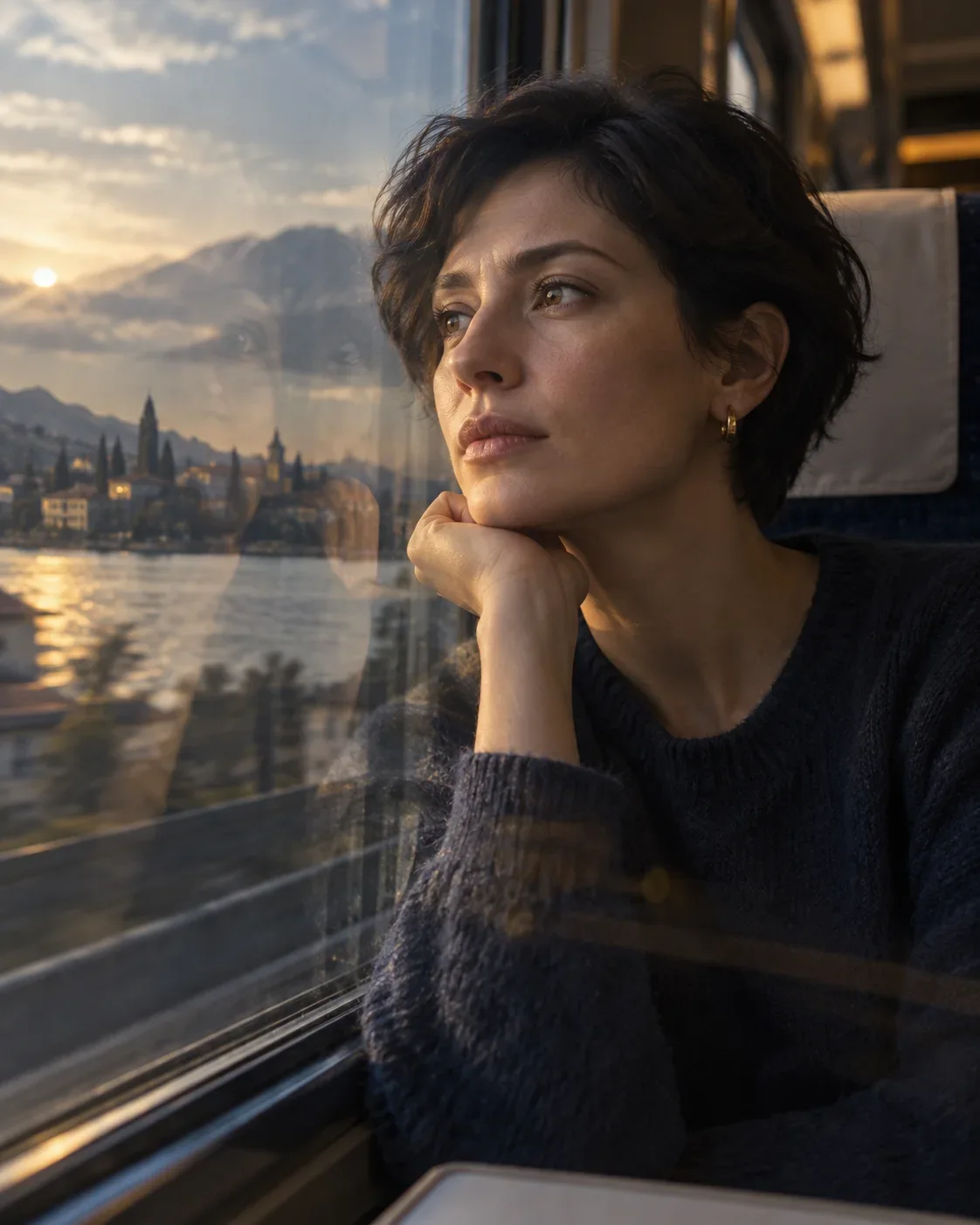
The train reflection stays secondary and the subject's eyes remain the portrait anchor.
The master prompt
Create a vertical 4:5 editorial portrait of [SUBJECT] in [SETTING], using [REFLECTION] as a secondary layer, framed as [COMPOSITION], with [LIGHTING] and [PALETTE]. Preserve natural facial anatomy, eyes, skin, hands, posture, and expression while the reflection adds a quiet story. No text, logos, watermark, or facial distortion.
Visual direction
Style: Intimate editorial portraiture with restrained environmental reflection.
Lighting: Train light, overcast daylight, studio sun, and rainy shelter glow create varied portrait moods.
Composition: The face and body remain primary while the reflection supplies an offset narrative layer.
Variables
- SUBJECT — portrait subject
- SETTING — lived environment
- REFLECTION — reflective context
- COMPOSITION — portrait framing
- LIGHTING — portrait light
- PALETTE — portrait colors
How to use it
- Choose a reflection that supports rather than crosses key facial features.
- Keep expression, hands, and posture simple and anatomically believable.
- Inspect eyes, fingers, and reflection boundaries before publication.
Same master prompt, different variables
Demo variations
Demo 01
a woman with short dark hair
- SETTING
- a quiet train compartment
- REFLECTION
- a layered reflection of passing countryside
- COMPOSITION
- close shoulder-up portrait with the reflection offset from her face
- LIGHTING
- late afternoon side light
- PALETTE
- smoke blue, amber, and cream
The train reflection stays secondary and the subject's eyes remain the portrait anchor.
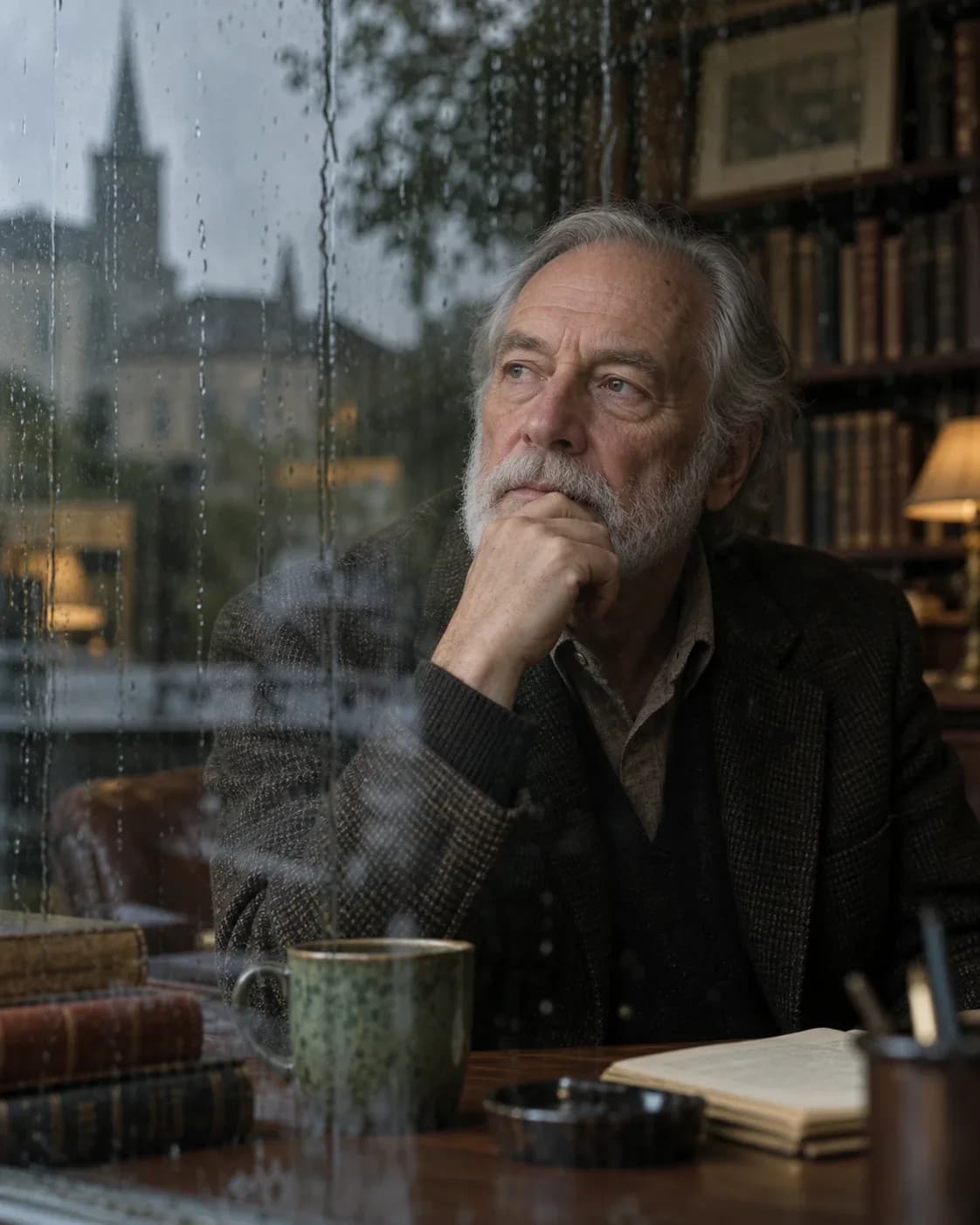
Demo 02
an older man
- SETTING
- a quiet library
- REFLECTION
- a rain-streaked window and distant trees
- COMPOSITION
- medium close portrait with the reflected branches crossing the background
- LIGHTING
- soft overcast light
- PALETTE
- green glass, tobacco, and warm skin tones
Branches and rain add atmosphere without obscuring the older man's face.
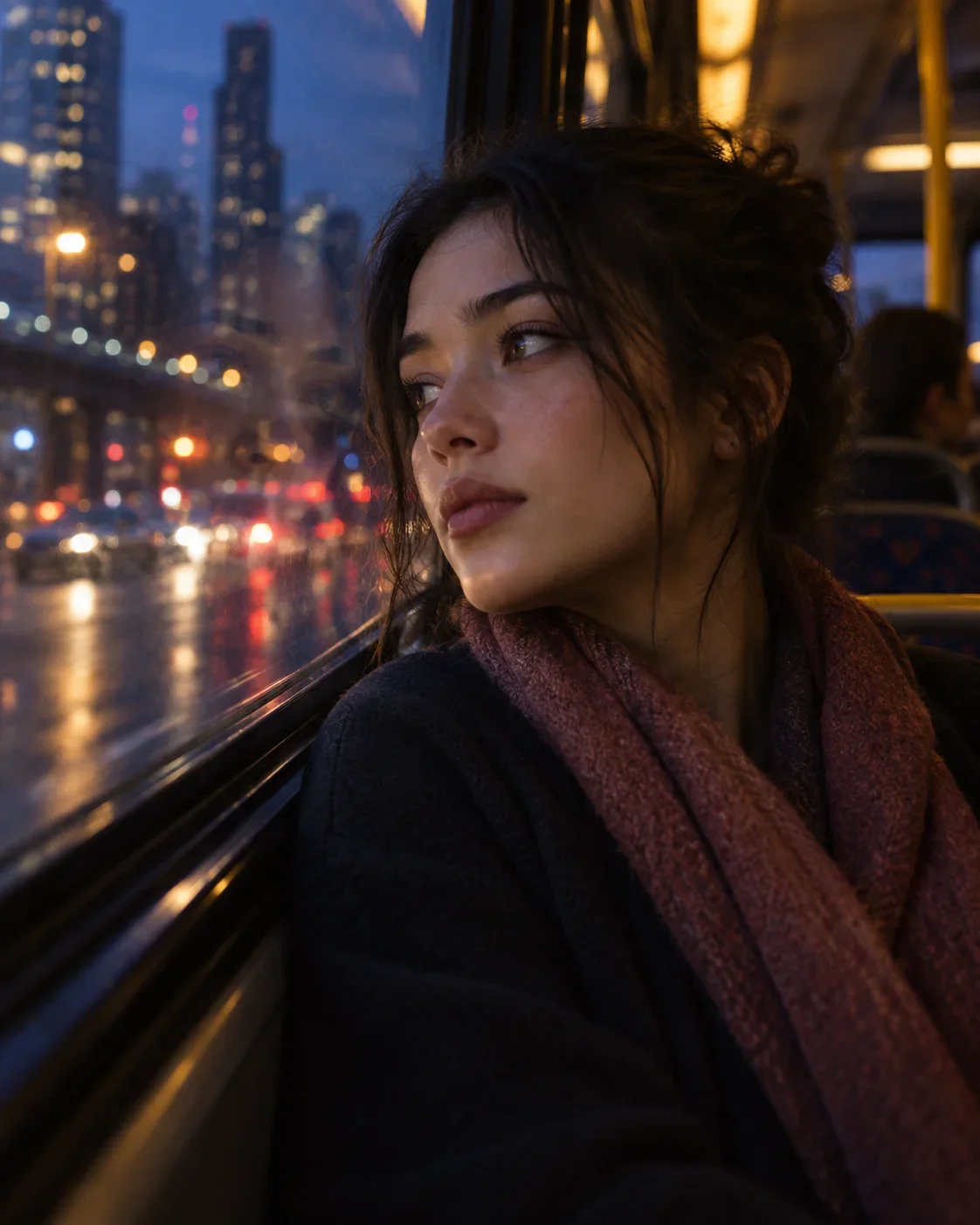
Demo 03
a ceramic artist
- SETTING
- a sunlit studio
- REFLECTION
- a glazed tile beside the workbench
- COMPOSITION
- medium portrait with the tile reflection balancing the shoulder line
- LIGHTING
- bright side daylight
- PALETTE
- white clay, cobalt, and warm skin tones
The glazed tile creates a material echo while the artist's expression stays clear.
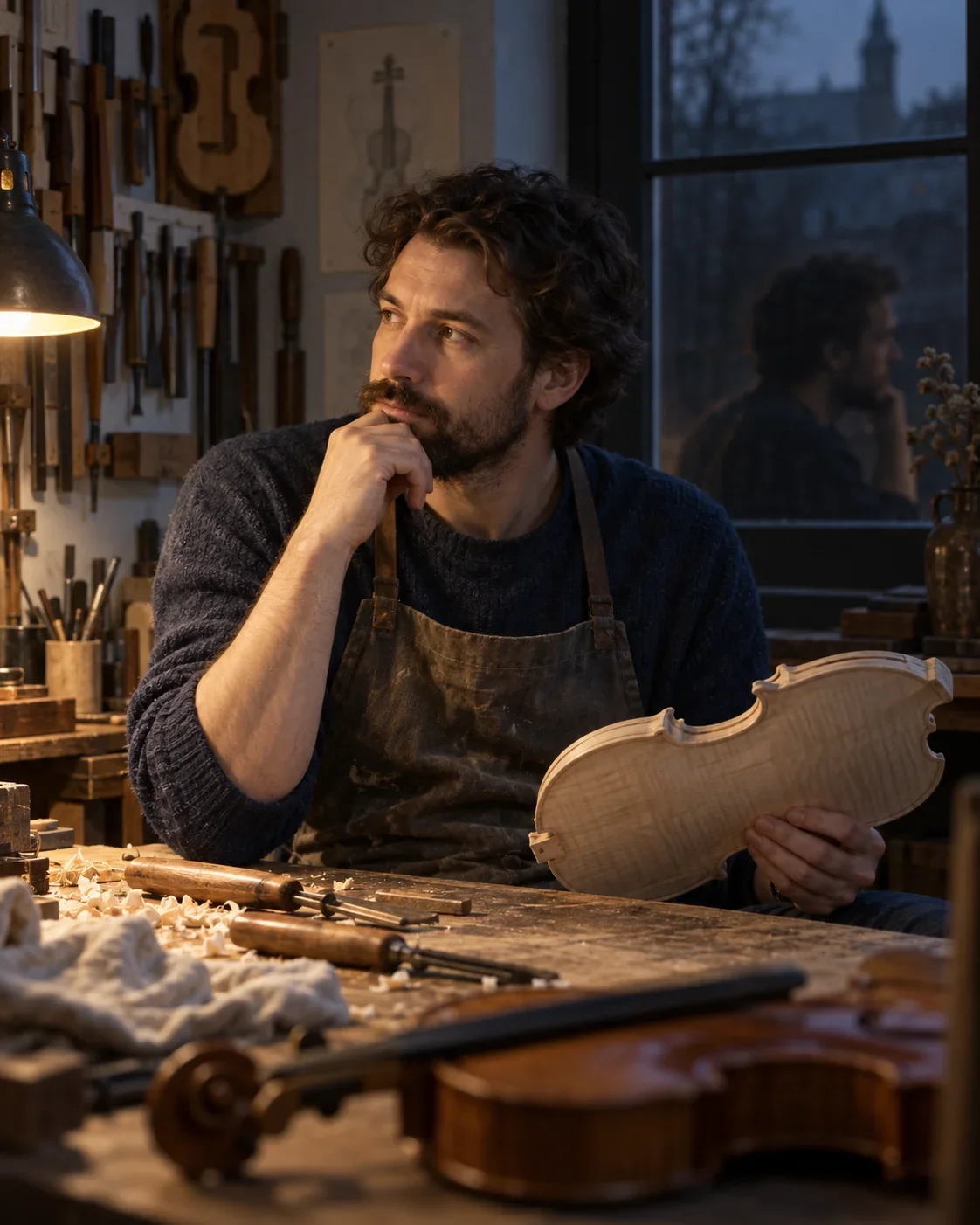
Demo 04
a bicyclist resting after rain
- SETTING
- a glass city shelter
- REFLECTION
- a subtle reflected street tree
- COMPOSITION
- medium-wide portrait with the shelter framing the body
- LIGHTING
- soft gray daylight and one warm reflected lamp
- PALETTE
- olive, pewter, and amber
The shelter, bicycle, and reflected tree establish context around a natural resting pose.
Consistency / testing notes
Face and expressionCONSISTENT
Each portrait keeps the face, eyes, and expression readable despite the reflection layer.
Reflection restraintMOSTLY CONSISTENT
Reflections stay secondary, with the rain shelter demo carrying slightly denser glass detail.
Editorial contextCONSISTENT
Train, library, studio, and shelter environments add distinct human-scale stories.
All four demos use final master prompt version v1-b7-window-reflection-portrait-studies; only declared variable values changed. Four authentic generations were assessed as one set.
Tips for better results
- Use glass or glaze as a compositional counterpoint, not a filter.
- Keep reflected detail less sharp than the subject.
- Avoid implying a real person's identity or documentary event.
Limitations
- Reflections may merge with hair or background details.
- Generated portraits do not guarantee likeness or consent.
- Review privacy, likeness, and representation before commercial use.