

Portrait
Reflective Glass Portrait Studies
A portrait prompt for quiet environmental studies layered through windows, mirrors, counters, or aquarium glass.
Featured real result
What this prompt produced
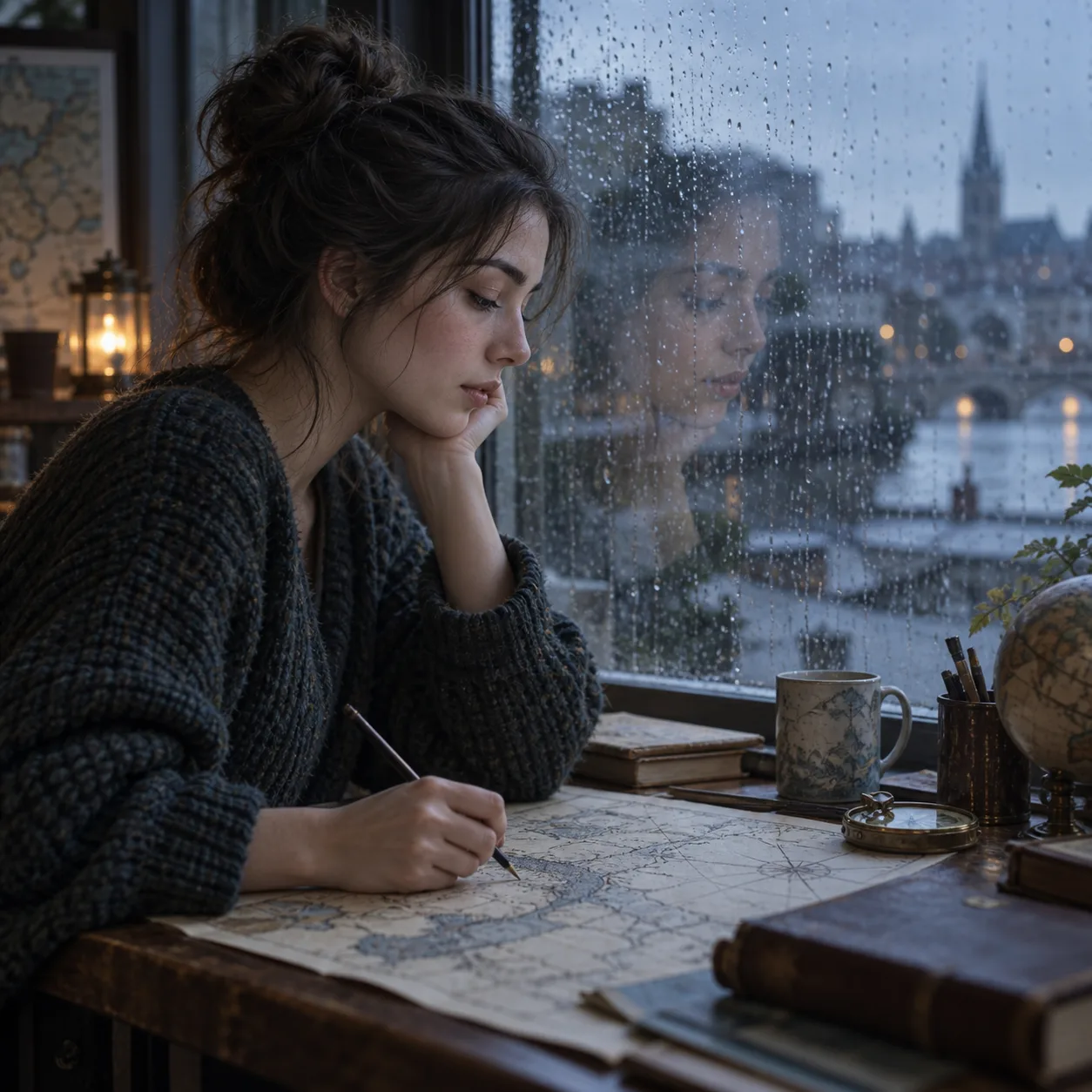
The cartographer's profile and window rain create a layered map-room portrait.
The master prompt
Create a square 1:1 editorial portrait of [SUBJECT] seen through [REFLECTION_SURFACE] in [SETTING], expressing [MOOD], framed as [COMPOSITION], with [LIGHTING] and [PALETTE]. Keep the subject's anatomy and face natural, use reflection as a compositional layer, and preserve quiet photographic realism. No text, logos, watermark, extra limbs, or distorted facial features.
Visual direction
Style: Quiet editorial portrait photography using reflection as a controlled environmental layer.
Lighting: Cool, soft, side, or ambient light preserves natural facial detail.
Composition: One person remains readable while a single reflective surface adds depth and context.
Variables
- SUBJECT — portrait subject
- REFLECTION_SURFACE — reflective layer
- SETTING — environment
- MOOD — emotional register
- COMPOSITION — framing
- LIGHTING — portrait light
- PALETTE — colors
How to use it
- Choose one subject, reflective surface, mood, and environment.
- Keep reflections supportive rather than duplicating the face excessively.
- Review anatomy, likeness, and privacy considerations.
Same master prompt, different variables
Demo variations
Demo 01
a young cartographer
- REFLECTION_SURFACE
- a rain-speckled window
- SETTING
- a dim map room
- MOOD
- quiet absorption
- COMPOSITION
- profile layered portrait
- LIGHTING
- cool window light
- PALETTE
- blue gray, paper white, indigo
The cartographer's profile and window rain create a layered map-room portrait.
Demo 02
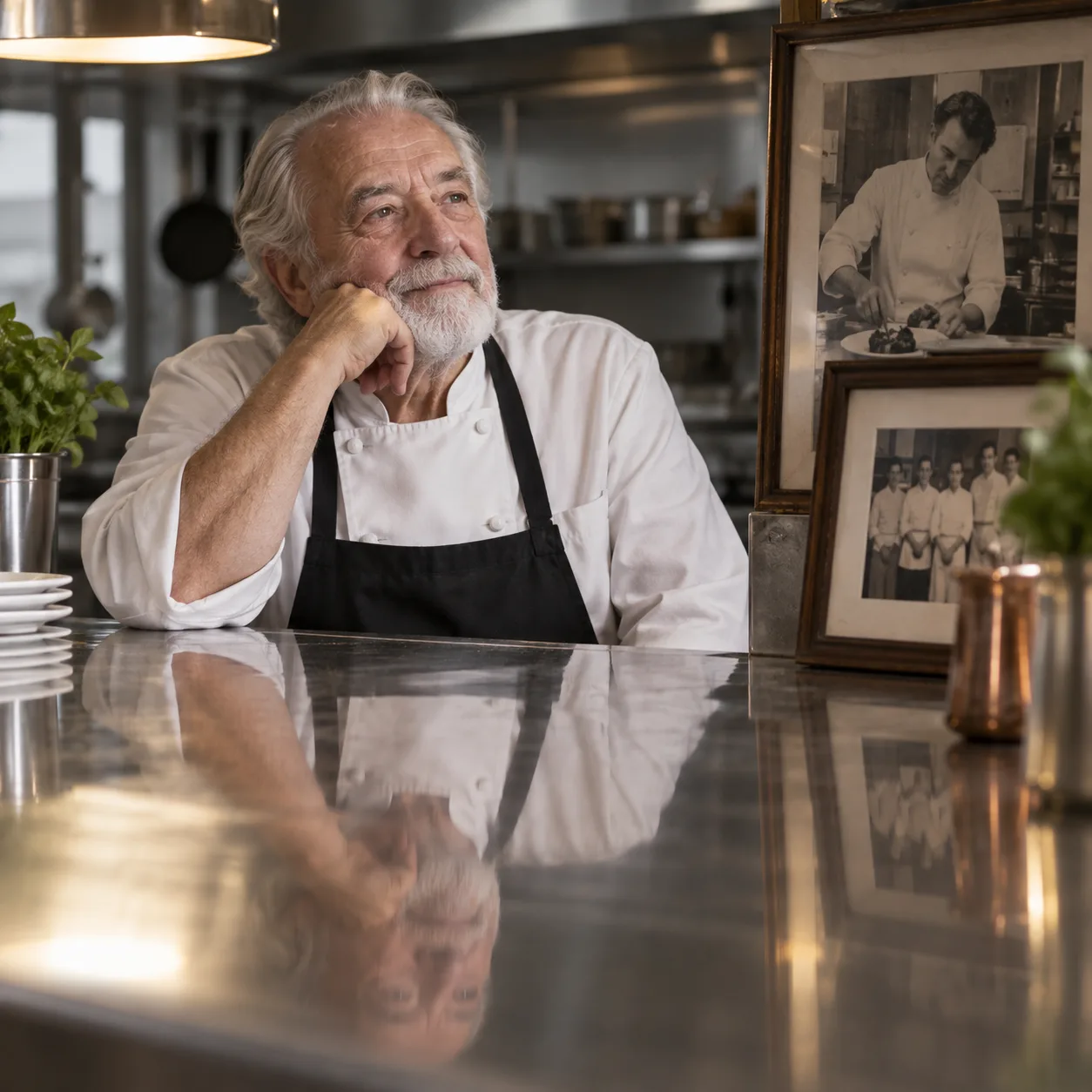
a retired chef
- REFLECTION_SURFACE
- a polished stainless counter
- SETTING
- an empty teaching kitchen
- MOOD
- patient memory
- COMPOSITION
- three-quarter reflection
- LIGHTING
- soft overhead light
- PALETTE
- steel, cream, warm skin
Stainless reflection doubles the chef's presence while the empty kitchen stays quiet.
Demo 03
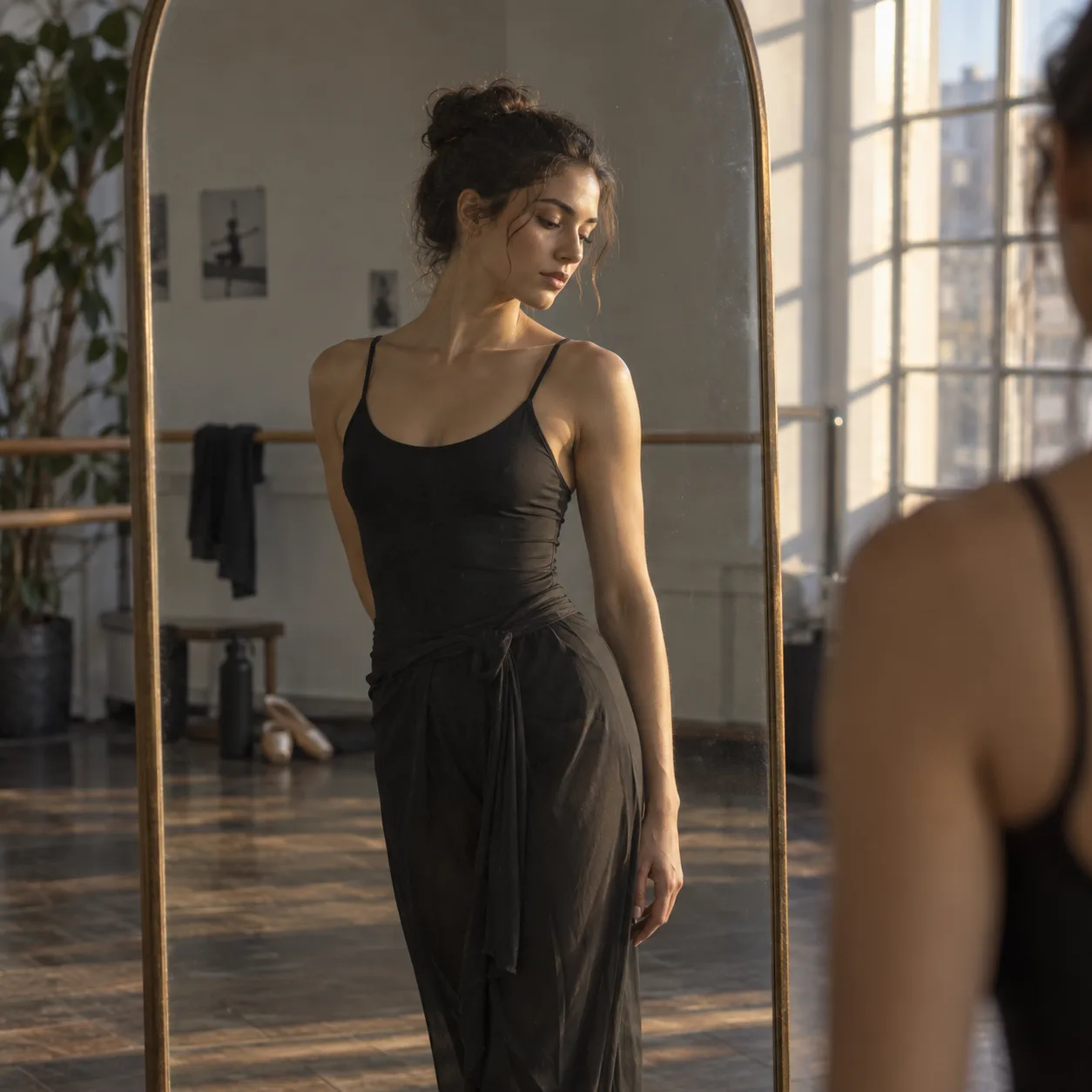
a contemporary dancer
- REFLECTION_SURFACE
- a tall studio mirror
- SETTING
- an empty rehearsal hall
- MOOD
- restful focus
- COMPOSITION
- full torso reflected frame
- LIGHTING
- late side light
- PALETTE
- rose, charcoal, pale gold
The dancer's torso and mirror hold a calm rehearsal-room rhythm without visual noise.
Demo 04
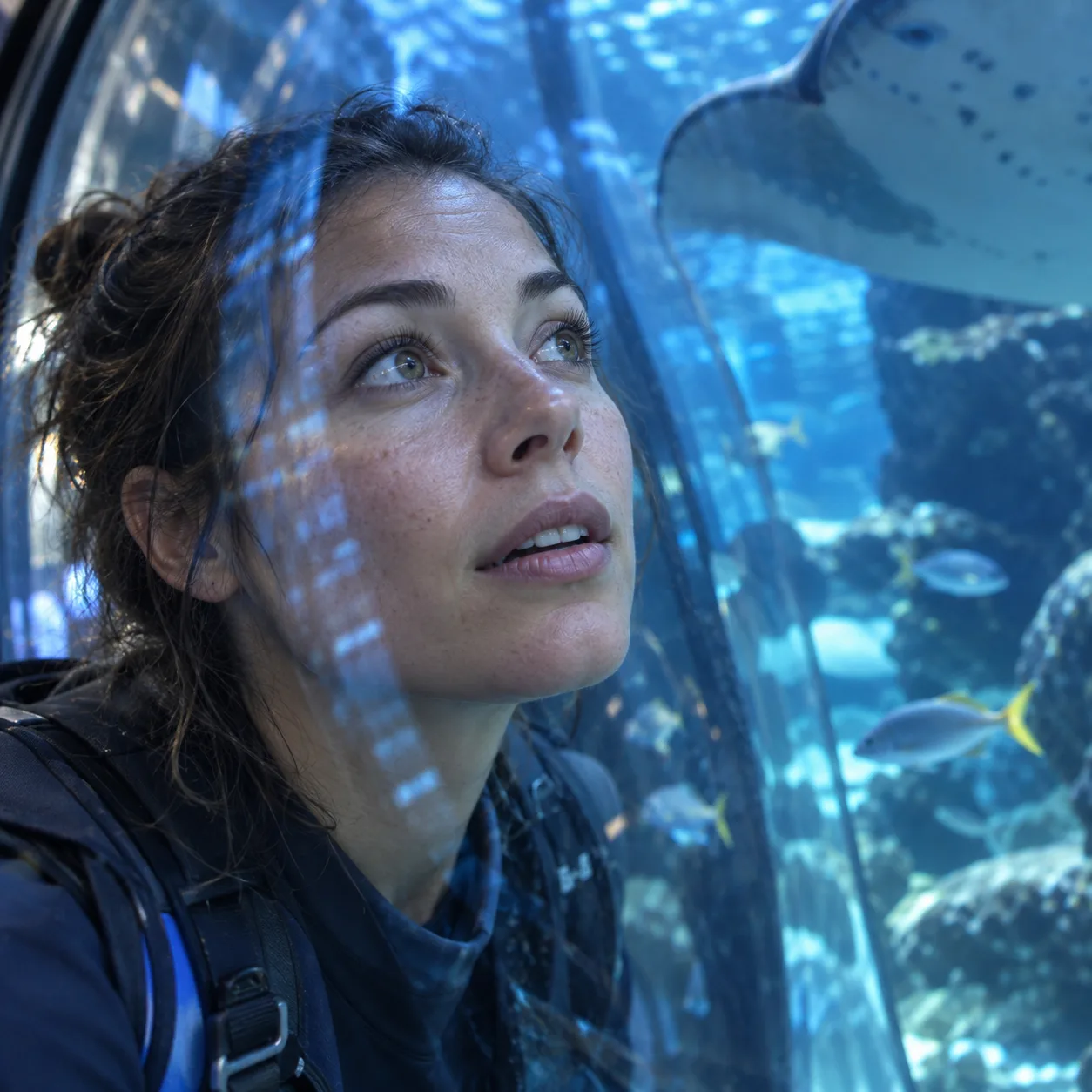
a marine researcher
- REFLECTION_SURFACE
- a curved aquarium glass
- SETTING
- a dark observation room
- MOOD
- alert wonder
- COMPOSITION
- close face and reflected water
- LIGHTING
- blue ambient light
- PALETTE
- teal, black, silver
Aquarium glass adds moving blue reflection around the researcher's focused face.
Consistency / testing notes
Subject readabilityMOSTLY CONSISTENT
The people remain identifiable as portrait subjects despite the reflective layers.
Reflection controlMOSTLY CONSISTENT
Windows, steel, mirrors, and glass add atmosphere with differing levels of duplication.
Natural anatomyMOSTLY CONSISTENT
Faces and posture are broadly usable with expected generative variation.
All four demos use final master prompt version v1; only declared variable values changed. Four authentic generations were assessed as one set.
Tips for better results
- Use surfaces with a reason to exist in the setting.
- Describe the emotional register without exaggerating expression.
- Treat outputs as creative portraits, not identity records.
Limitations
- Reflections and facial details can vary.
- Exact likeness is not guaranteed.
- Review consent, publicity, and commercial-use requirements.