

Travel & Landscape
Weather-Defined Route Essays
An editorial travel prompt where weather changes the route, atmosphere, and sense of place without relying on postcard views.
Featured real result
What this prompt produced
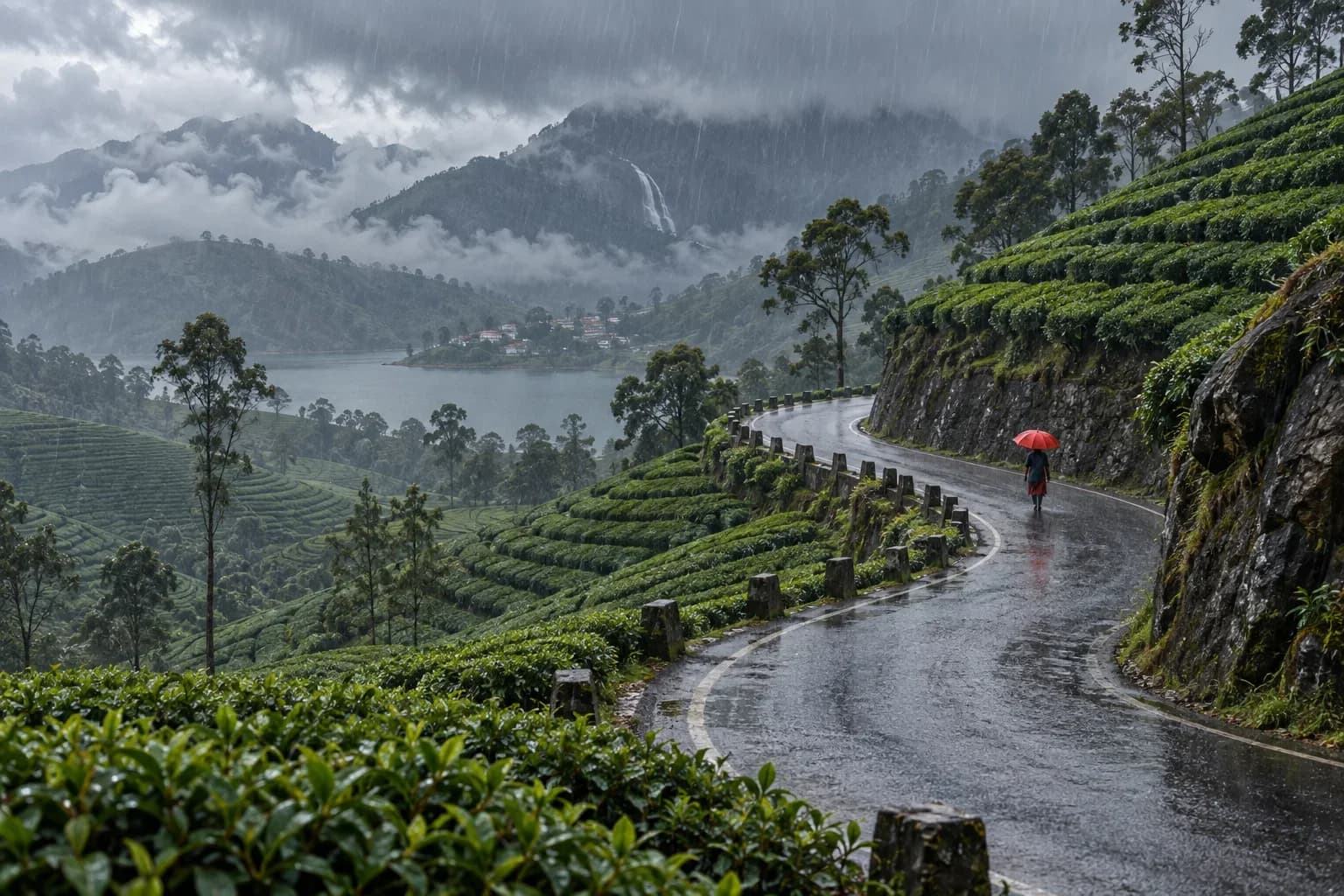
The red umbrella gives the wet tea hills a human-scale anchor without becoming the subject.
The master prompt
Create a horizontal 3:2 editorial travel photograph of [ROUTE] through [PLACE] during [WEATHER], with [SCALE_CUE], framed as [COMPOSITION], using [LIGHTING] and [PALETTE]. Make geography believable with clear foreground, midground, and background layers; let weather shape the story without obscuring the route. No text, logos, watermark, duplicate people, or distorted anatomy.
Visual direction
Style: Observed editorial travel photography shaped by weather and route logic.
Lighting: Rain, dawn fog, split storm sun, and blue dusk create distinct atmospheric journeys.
Composition: A route leads through layered geography while one small cue establishes human scale.
Variables
- ROUTE — travel route or passage
- PLACE — geographic context
- WEATHER — weather condition
- SCALE_CUE — small human or built scale cue
- COMPOSITION — travel framing
- LIGHTING — weather light
- PALETTE — environmental colors
How to use it
- Choose a route whose weather changes visibility or material behavior.
- Keep geographic layers plausible and signage non-readable.
- Review cultural context, geography, and accidental identifiers.
Same master prompt, different variables
Demo variations
Demo 01
a narrow mountain road
- PLACE
- terraced tea hills
- WEATHER
- a sudden rainstorm
- SCALE_CUE
- a tiny red umbrella
- COMPOSITION
- winding S-curve with the road leading through layered hills
- LIGHTING
- silver rain light
- PALETTE
- jade, slate, and vermilion
The red umbrella gives the wet tea hills a human-scale anchor without becoming the subject.
Demo 02
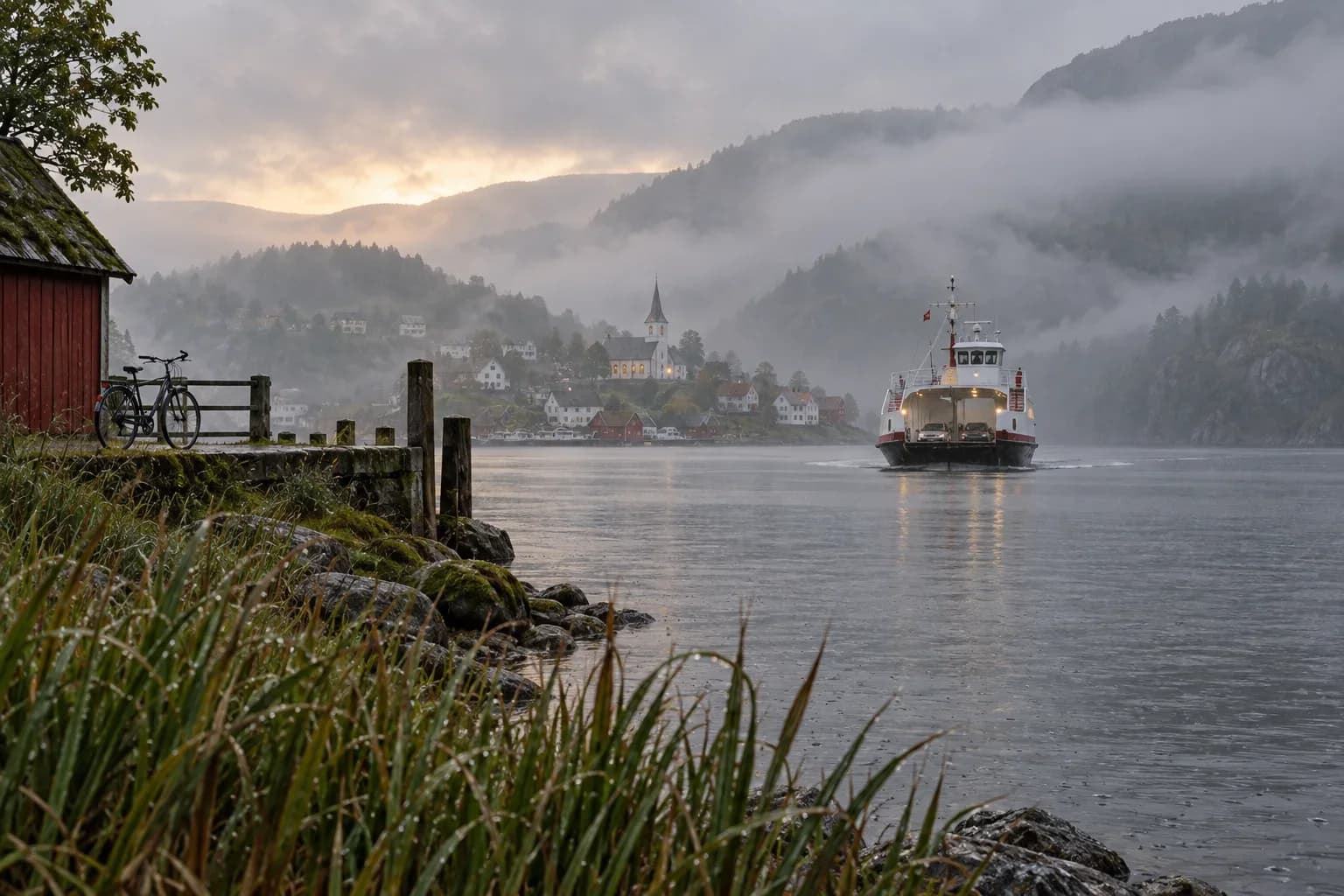
a river ferry approach
- PLACE
- a fog-hidden village
- WEATHER
- dawn drizzle
- SCALE_CUE
- a lone bicycle
- COMPOSITION
- foreground reeds leading across layered water toward hills
- LIGHTING
- soft gray dawn light
- PALETTE
- moss, pewter, and faded red
Reeds, ferry, and fog create a layered route story that feels observed rather than postcard-like.
Demo 03
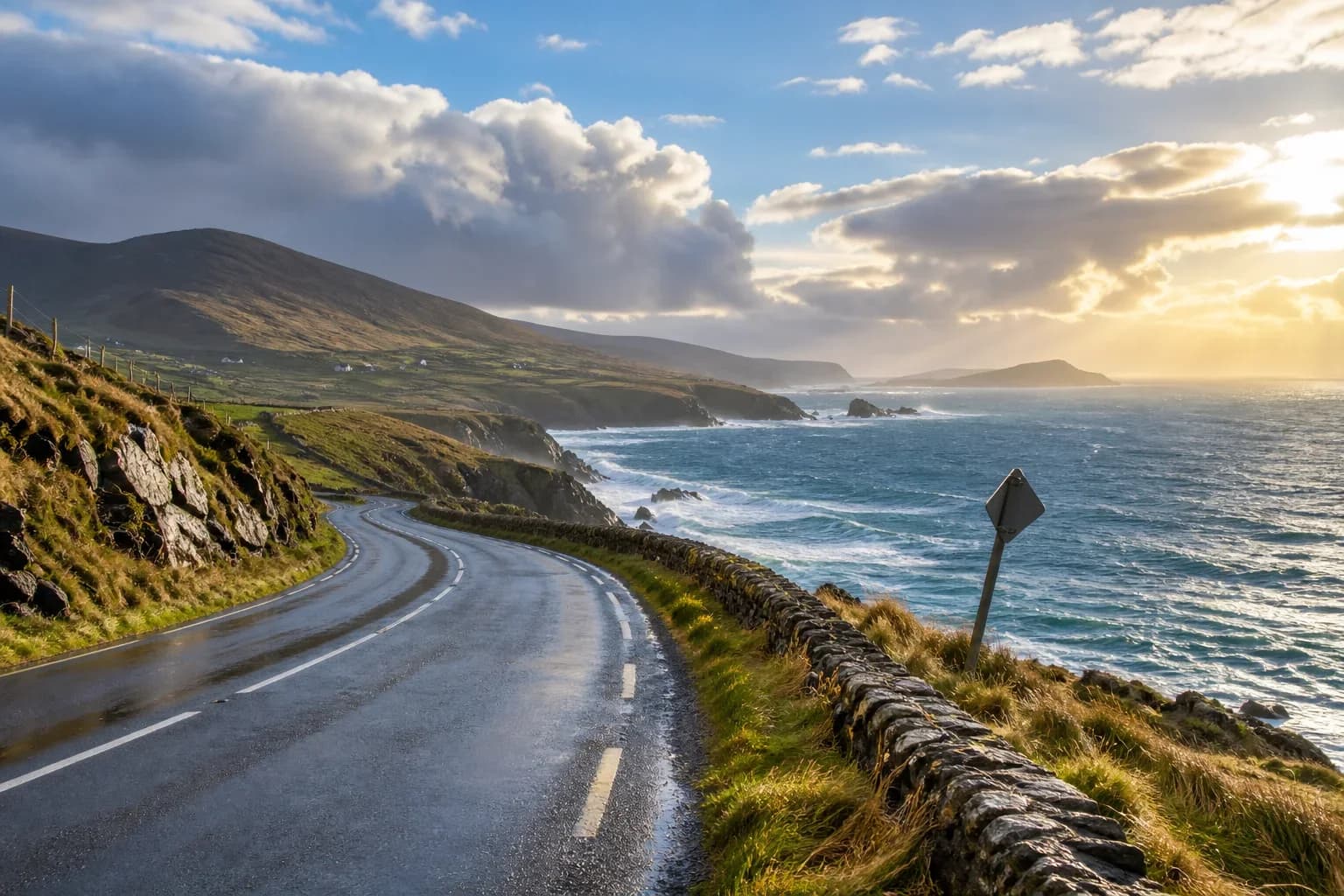
a desert railway crossing
- PLACE
- a mesa valley
- WEATHER
- a distant thunderstorm
- SCALE_CUE
- a small water tower
- COMPOSITION
- broad tracks leading toward the storm and mesas
- LIGHTING
- split sunlight and a visible rain curtain
- PALETTE
- ochre, indigo, and silver
Tracks and the water tower establish scale against the storm and broad mesa geography.
Demo 04
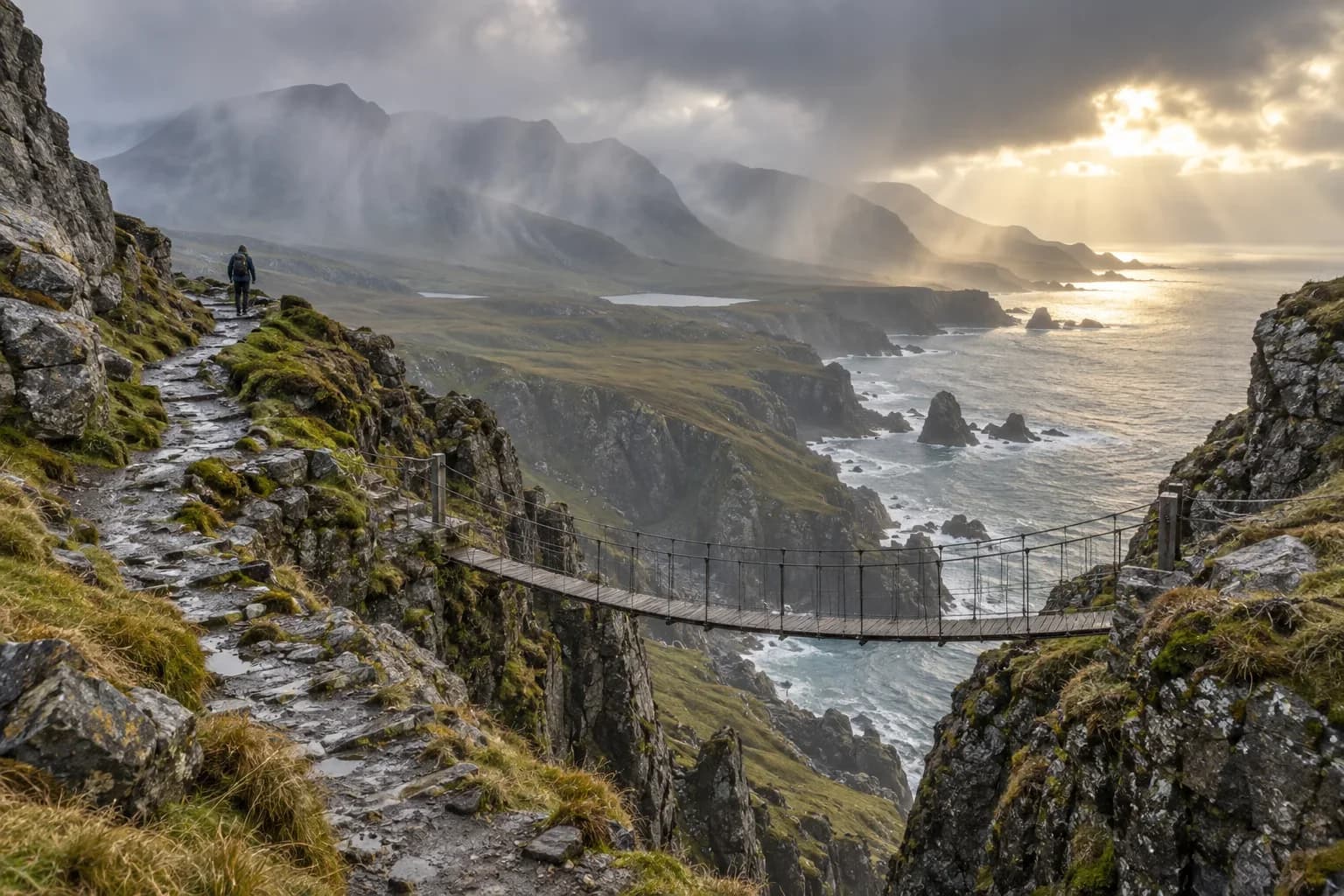
a forest road over a high wooden footbridge
- PLACE
- a snow-covered mountain forest
- WEATHER
- first snow at blue dusk
- SCALE_CUE
- a small yellow backpack
- COMPOSITION
- layered leading lines from bridge to dark pines
- LIGHTING
- blue dusk with warm headlamp glow
- PALETTE
- pine, snow, and yellow
The bridge and backpack lead through the first snow while the headlamp adds a small warm cue.
Consistency / testing notes
Sense of placeCONSISTENT
Tea hills, fogged river, desert mesa, and snowy forest create distinct geographic contexts.
Weather behaviorCONSISTENT
Rain, drizzle, storm, and snow visibly affect atmosphere and route material.
Layered depthCONSISTENT
Foreground, route, and distant geography remain readable across the four frames.
All four demos use final master prompt version v1-b7-weather-defined-route-essays; only declared variable values changed. Four authentic generations were assessed as one set.
Tips for better results
- Use weather to change the route's texture, not just its color grade.
- Keep the scale cue small and anonymous.
- Add verified place names and travel claims outside the image.
Limitations
- Generated geography and weather may be inaccurate.
- The image is not documentary evidence of a real route or event.
- Review environmental and cultural representation before publication.