

Travel & Landscape
Cinematic Destination Landscapes
A reusable image-generation prompt for cinematic travel landscapes with a clear sense of place, atmosphere, and editorial composition.
Featured real result
What this prompt produced
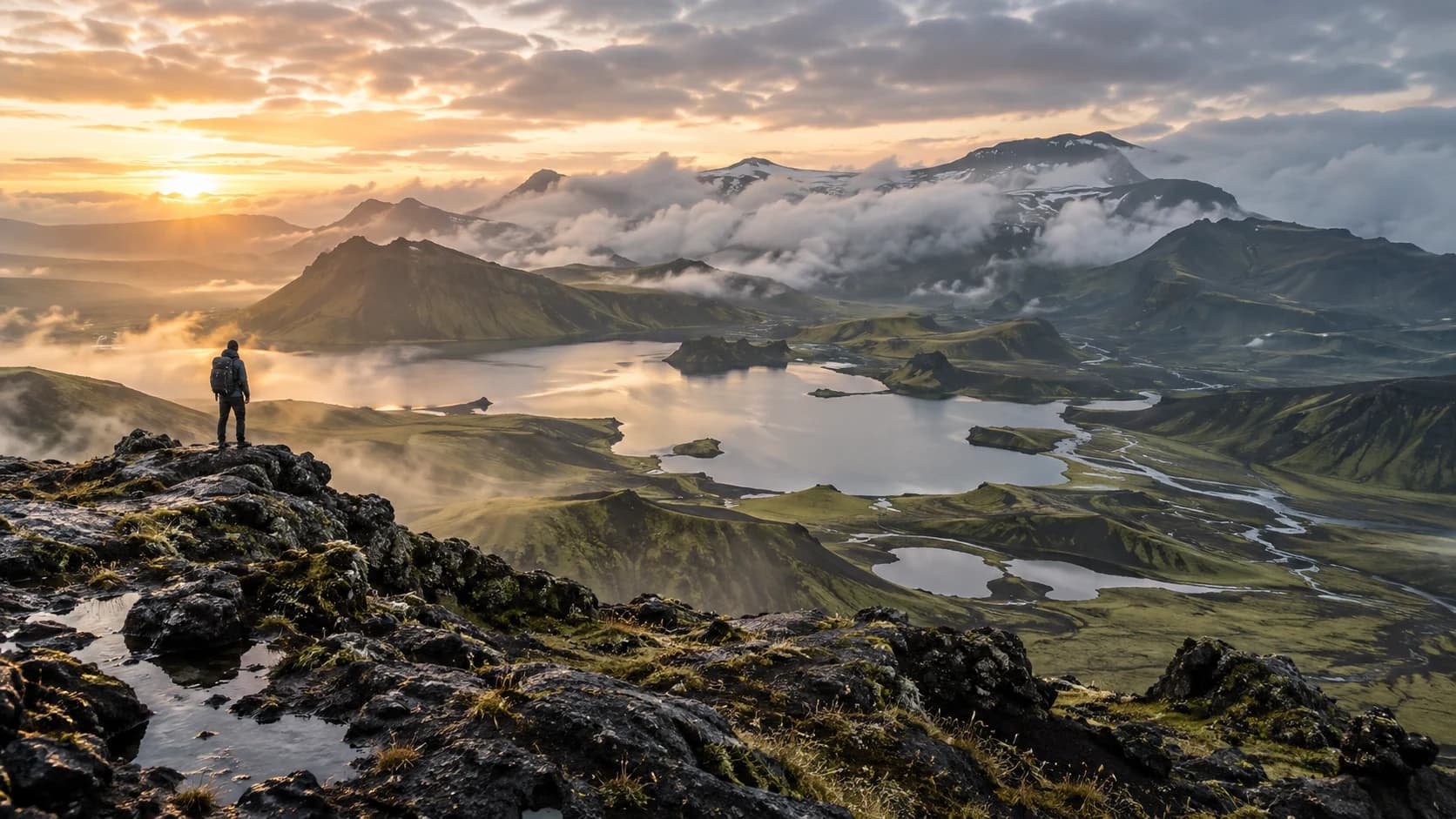
The wide frame gives the hiker scale against layered volcanic ridges, reflective water, and sunrise mist.
The master prompt
Create a cinematic editorial travel photograph in a true 16:9 wide landscape frame of [SUBJECT] during [SETTING], featuring a believable sense of place. Make the environment the primary subject, with meaningful foreground, midground, and background depth, a clear horizon, and a small focal element for scale. Use [COMPOSITION], [LIGHTING], [PALETTE], and rich natural textures. Keep the image realistic and uncluttered; avoid portrait cropping, readable text, logos, watermarks, duplicated people, and distorted architecture.
Visual direction
Style: Cinematic editorial travel photography with natural texture and a believable sense of place.
Lighting: Weather and time-of-day variables create atmosphere while retaining landscape depth and subject scale.
Composition: Wide vistas, shoreline perspectives, reflections, or leading lines chosen for the destination.
Variables
- SUBJECT — destination and focal travel element
- SETTING — time and weather
- COMPOSITION — landscape viewpoint
- LIGHTING — natural light condition
- PALETTE — environmental color direction
How to use it
- Use a specific place type without inventing factual claims about a real location.
- Keep the landscape and focal element compatible.
- Review architecture, people, and location representation before publication.
Same master prompt, different variables
Demo variations
Demo 01
a misty volcanic highland with a solitary hiker
- SETTING
- cool dawn after rain
- COMPOSITION
- a wide layered landscape
- LIGHTING
- soft diffused sunrise
- PALETTE
- slate, moss, muted gold
The wide frame gives the hiker scale against layered volcanic ridges, reflective water, and sunrise mist.
Demo 02
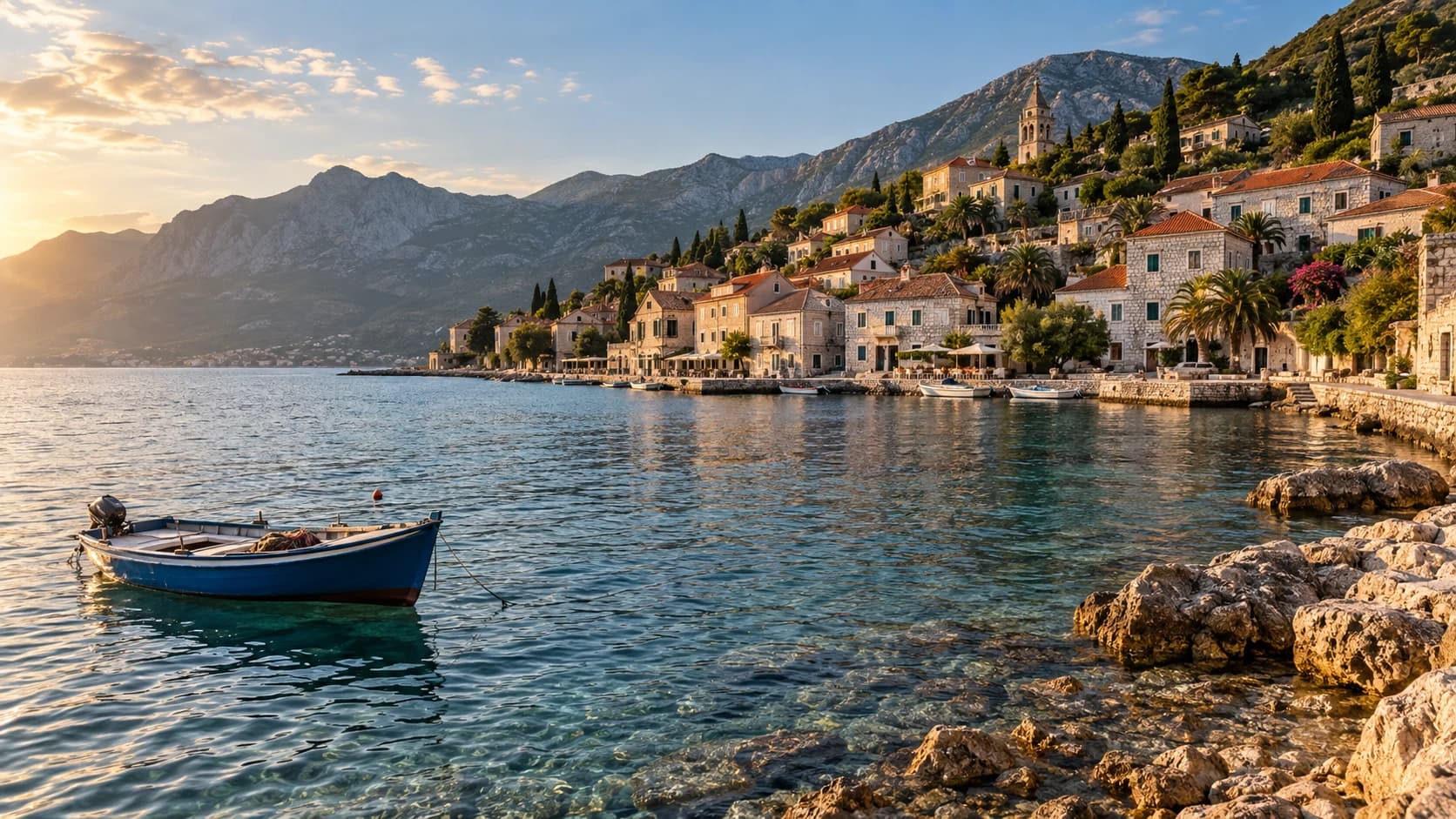
a Mediterranean fishing village with a small blue boat
- SETTING
- clear late afternoon
- COMPOSITION
- a shoreline perspective
- LIGHTING
- warm low sun
- PALETTE
- cobalt, limestone, terracotta
The shoreline view keeps the village and mountain context broad while the blue boat anchors the foreground.
Demo 03
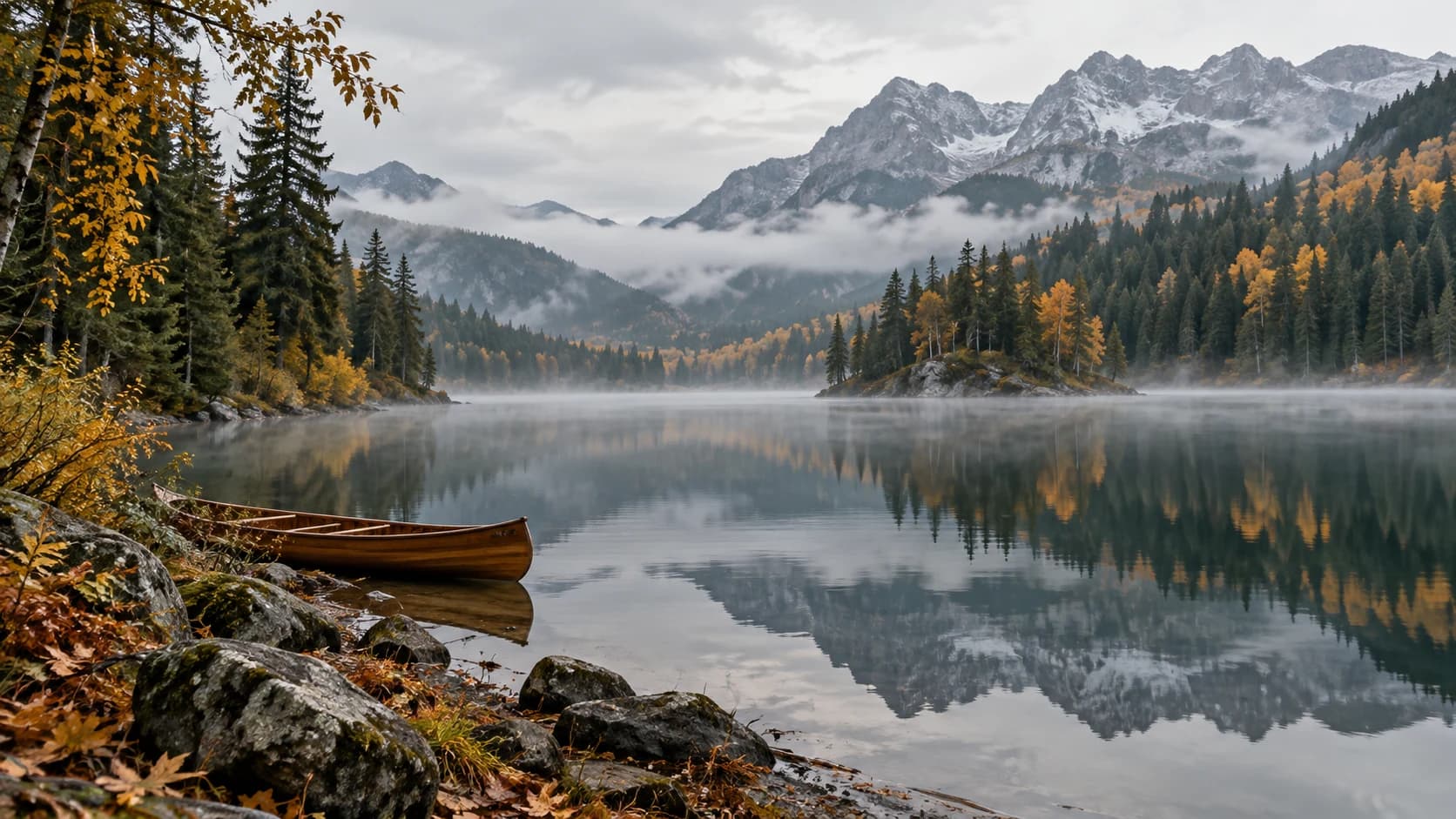
a northern forest lake with a wooden canoe
- SETTING
- quiet autumn morning
- COMPOSITION
- a balanced lake reflection
- LIGHTING
- pale overcast light
- PALETTE
- pine green, ochre, gray
The canoe sits in a quiet foreground pocket and the lake reflection carries depth into the autumn mountains.
Demo 04
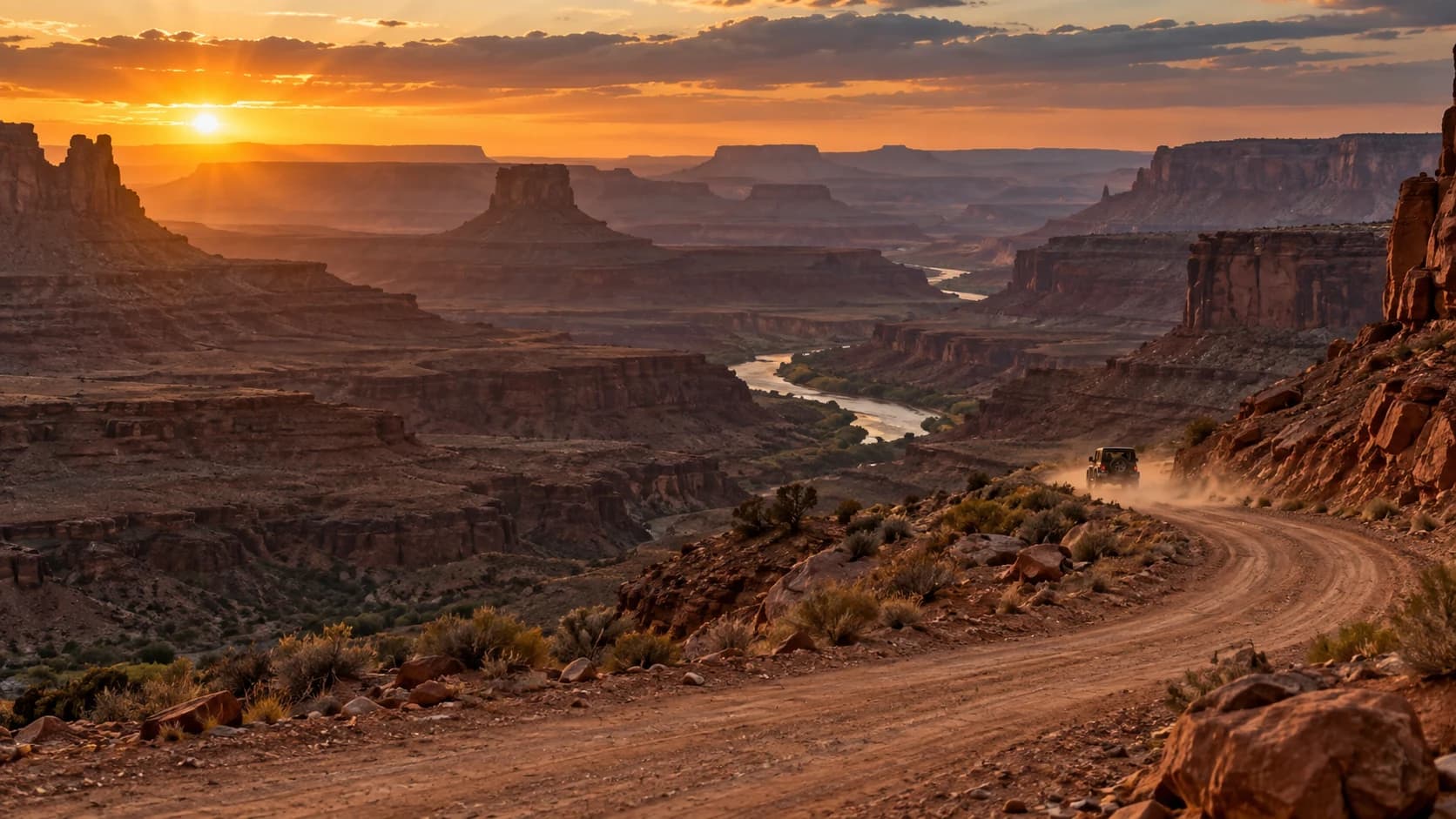
a desert canyon road with a distant off-road vehicle
- SETTING
- dry sunset with dust haze
- COMPOSITION
- a leading-line vista
- LIGHTING
- deep amber side light
- PALETTE
- rust, sand, indigo
The road creates a strong leading line through the canyon while the vehicle stays secondary to the landscape.
Consistency / testing notes
Wide environmental framingCONSISTENT
All four regenerated demos use a genuine wide landscape frame with the environment dominant.
Foreground to background depthCONSISTENT
Rocks, water, roads, villages, and mountain layers create readable spatial depth across the set.
Focal subject scaleMOSTLY CONSISTENT
The hiker, boat, canoe, and vehicle remain secondary, though their distance varies by scene.
All four demos use final master prompt version v2-cinematic-destination-16x9; only declared variable values changed. Four authentic generations were assessed as one set.
Tips for better results
- Use a small focal subject to communicate scale.
- Let weather and light carry atmosphere without hiding the landscape.
- Use exact map or destination labeling outside the generated image.
Limitations
- Generated geography and architecture may not represent a real place accurately.
- Reflections, distant people, and vehicles can contain artifacts.
- Travel imagery does not guarantee an authentic documentary record.