

Vintage & Artistic
Analog Darkroom Contact Sheets
A vintage-art prompt for tactile contact-sheet arrangements that make an analog editing process part of the image.
Featured real result
What this prompt produced
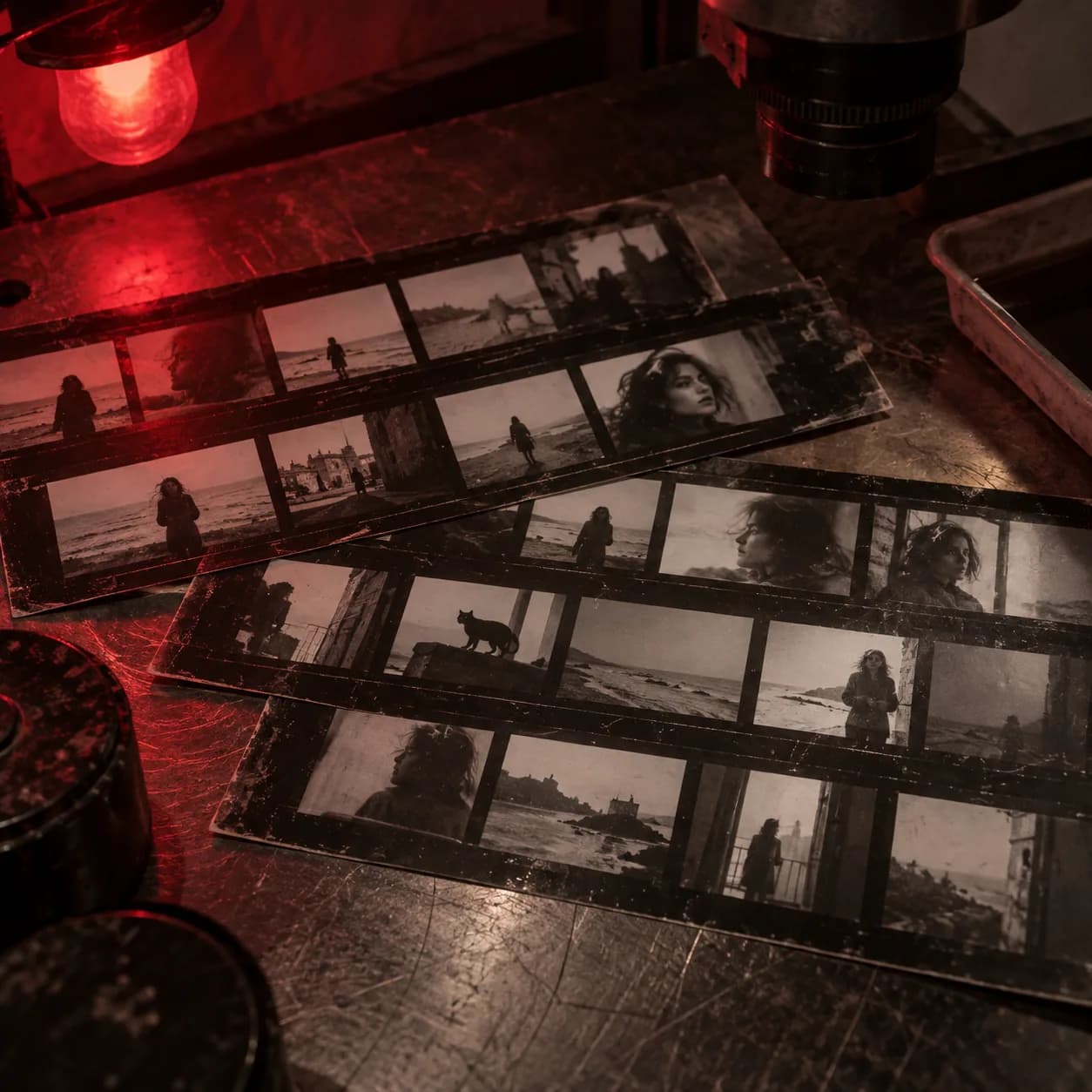
Storm contact sheets overlap on the scratched table and the red safelight establishes the darkroom process.
The master prompt
Create a square 1:1 vintage artistic photograph of [SUBJECT] presented as [PROCESS] across [SURFACE] in [SETTING], arranged as [COMPOSITION], with [LIGHTING] and [PALETTE]. Emphasize tactile analog imperfections, authentic material age, and a coherent darkroom mood while preserving recognizable imagery. No readable text, logos, watermark, or clutter.
Visual direction
Style: Tactile vintage darkroom photography with analog surfaces, proof arrangements, and restrained age.
Lighting: Safelight, window spill, tungsten, and fluorescent cues distinguish the working environments.
Composition: Prints and their working surface are both part of the subject, not decorative background only.
Variables
- SUBJECT — photographed subject
- PROCESS — analog print process
- SURFACE — print support
- SETTING — darkroom context
- COMPOSITION — print arrangement
- LIGHTING — darkroom light
- PALETTE — period palette
How to use it
- Choose a subject, analog process, surface, and arrangement.
- Keep any markings non-readable and avoid modern logos.
- Review whether the process and material remain visually coherent.
Same master prompt, different variables
Demo variations
Demo 01
coastal storm photographs
- PROCESS
- silver gelatin contact sheets
- SURFACE
- a scratched enlarger table
- SETTING
- a small darkroom
- COMPOSITION
- overlapping proof grid
- LIGHTING
- single red darkroom safelight
- PALETTE
- black, silver, muted red
Storm contact sheets overlap on the scratched table and the red safelight establishes the darkroom process.
Demo 02
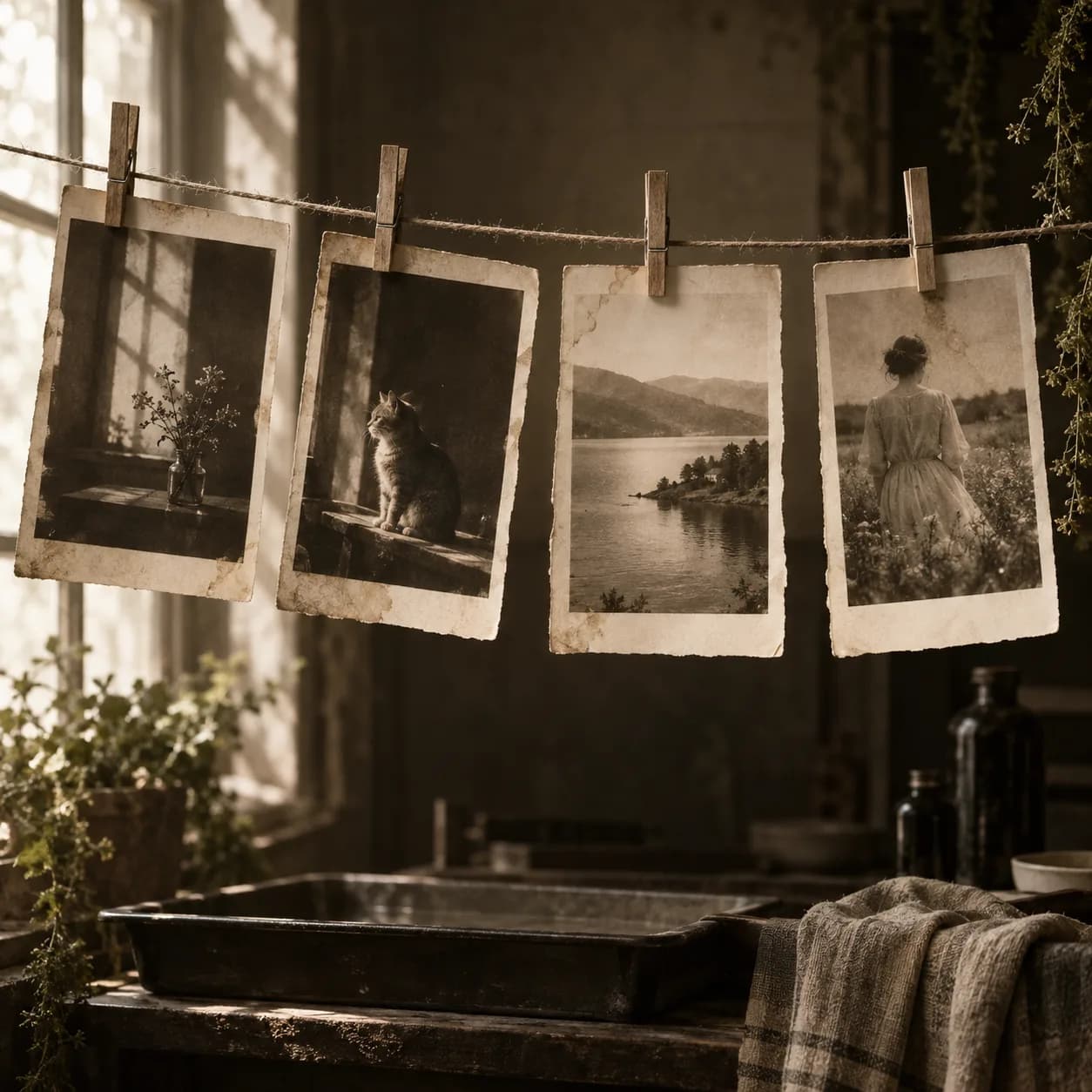
botanical exposure tests
- PROCESS
- contact prints with uneven borders
- SURFACE
- a linen drying line
- SETTING
- a quiet print room
- COMPOSITION
- vertical hanging arrangement
- LIGHTING
- soft window spill
- PALETTE
- sepia, paper white, moss
Botanical proofs hang vertically with uneven borders and a visible linen support.
Demo 03
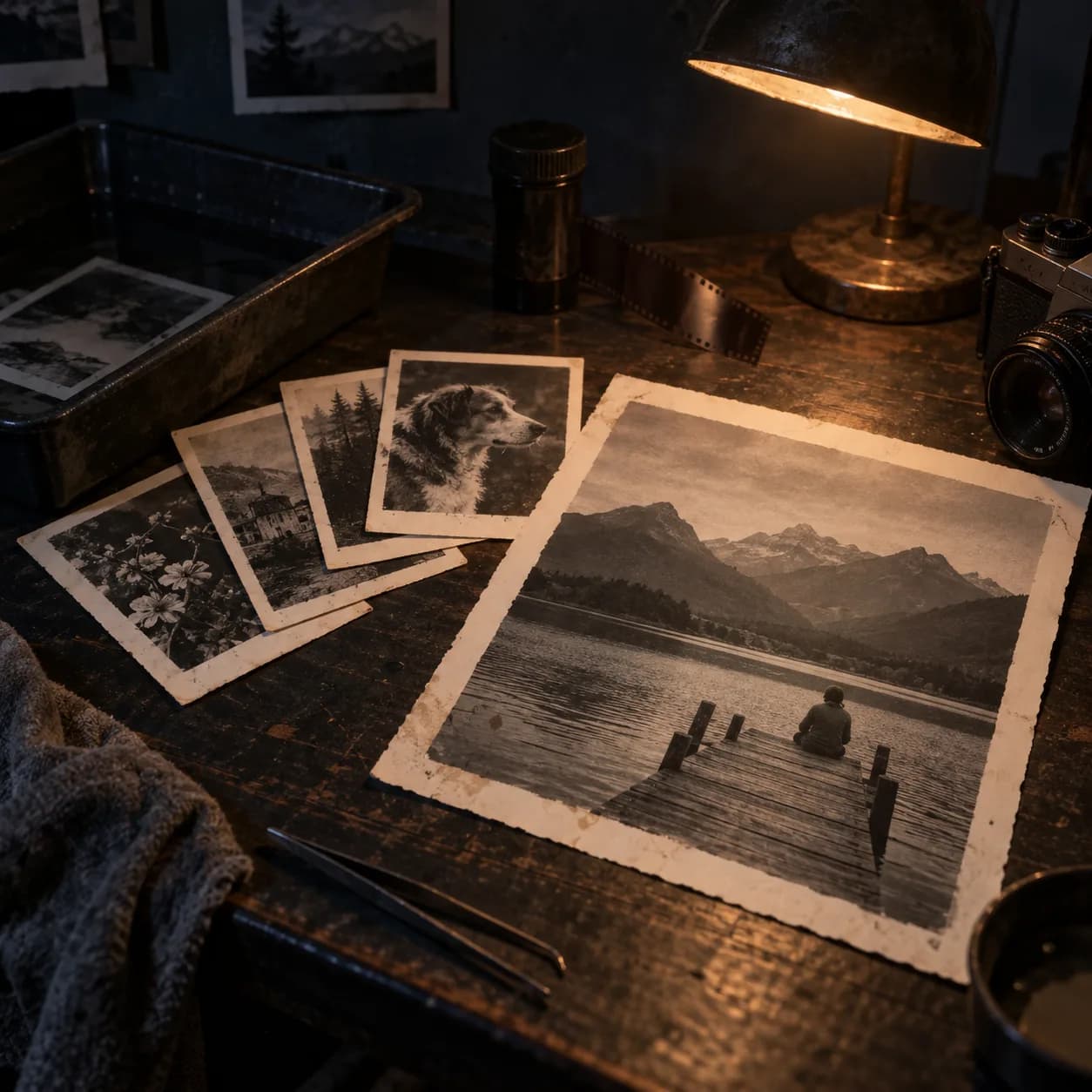
architectural night studies
- PROCESS
- small fiber prints
- SURFACE
- a dark editing desk
- SETTING
- an analog studio
- COMPOSITION
- fan of prints with one enlarged image
- LIGHTING
- low tungsten lamp
- PALETTE
- navy, amber, gray
Small fiber prints fan across the desk around one larger architectural study.
Demo 04
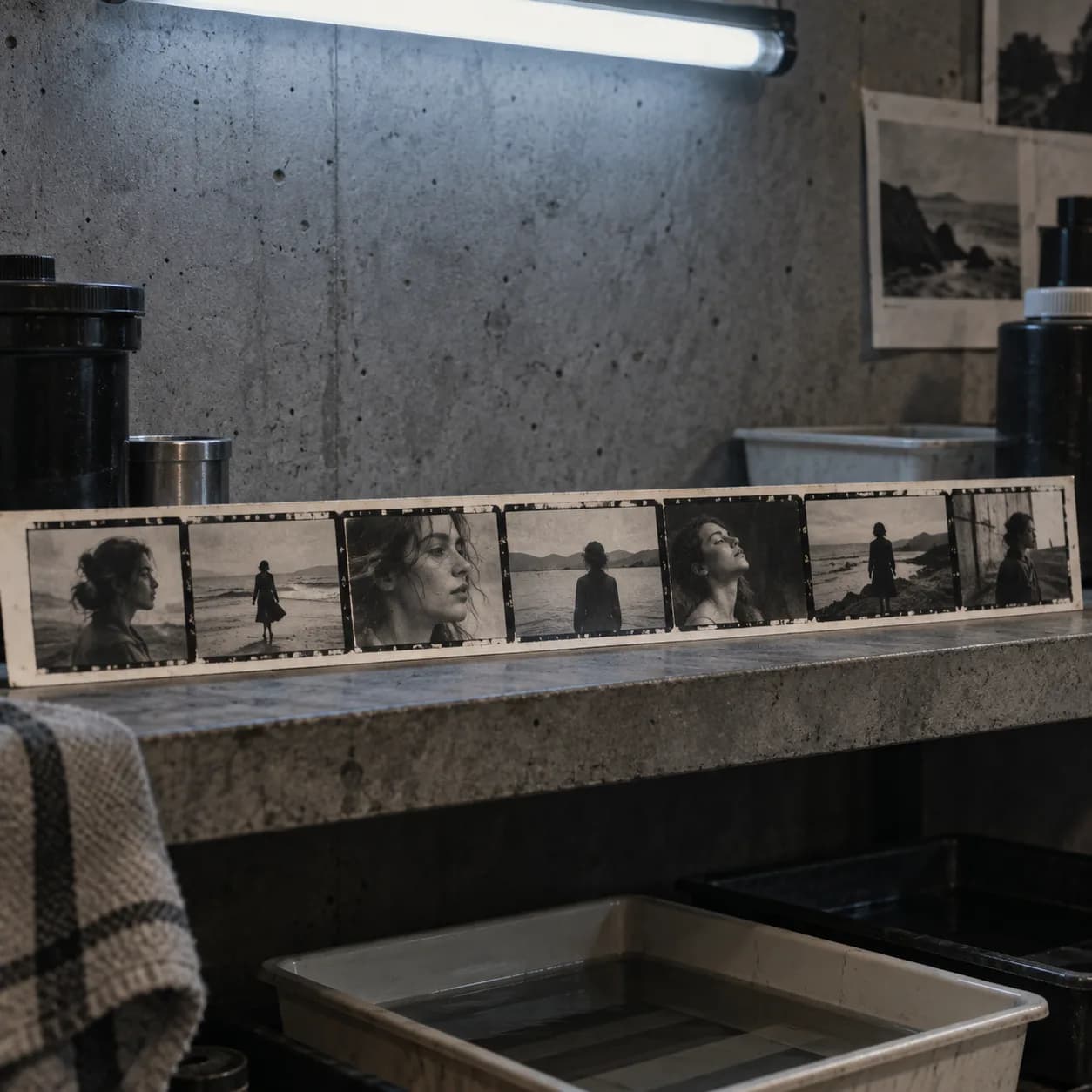
family-free street fragments
- PROCESS
- handwritten-free proof strips
- SURFACE
- a concrete studio shelf
- SETTING
- a private editing room
- COMPOSITION
- long horizontal sequence
- LIGHTING
- cool fluorescent spill
- PALETTE
- blue gray, cream, charcoal
The street fragments form a long proof sequence with no handwriting or modern labels.
Consistency / testing notes
Analog processCONSISTENT
Each scene visibly includes a print workflow rather than a generic vintage filter.
Material ageMOSTLY CONSISTENT
Paper, table, linen, and grain create tactile age with different levels of wear.
Image recognitionCONSISTENT
Storms, botanicals, buildings, and street fragments remain readable through the process.
All four demos use final master prompt version v1; only declared variable values changed. Four authentic generations were assessed as one set.
Tips for better results
- Use paper edges and working surfaces to show process.
- Keep one enlarged print as a hierarchy cue when useful.
- Do not present generated imagery as historical evidence.
Limitations
- Analog-process accuracy is approximate.
- Print borders and grain vary.
- Verify archival or historical claims independently.