

Vintage & Artistic
Cyanotype Botanical Art Studies
An artistic prompt for archival botanical studies using process texture, specimen structure, and restrained period-inspired palettes.
Featured real result
What this prompt produced
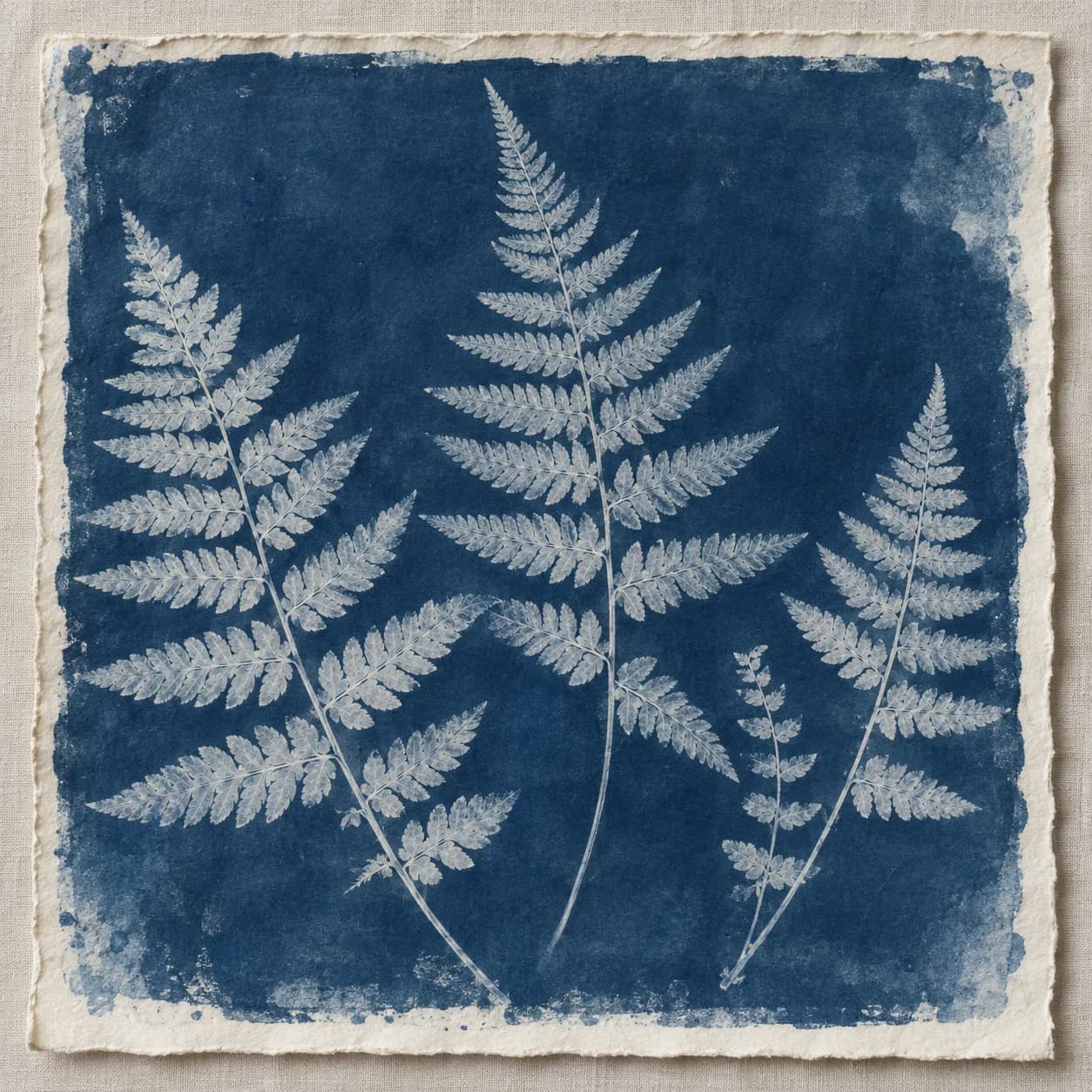
Fern silhouettes hold their structure against the blue contact-print field and the paper remains visibly tactile.
The master prompt
Create a square 1:1 fine-art image of [SUBJECT] interpreted as [MEDIUM] on [SURFACE] in [SETTING], composed as [COMPOSITION], with [LIGHTING] and [PALETTE]. Preserve recognizable natural structure while emphasizing tactile process marks, restrained age, and a coherent archival-art feeling. No readable text, logos, watermark, or clutter.
Visual direction
Style: Tactile archival fine art with botanical structure, process marks, and restrained vintage atmosphere.
Lighting: Diffuse or raking light reveals paper, pigment, vellum, and natural contours.
Composition: Specimens are arranged deliberately with enough surface visible to make the medium part of the image.
Variables
- SUBJECT — natural specimen
- MEDIUM — artistic process
- SURFACE — art support
- SETTING — display or work setting
- COMPOSITION — arrangement
- LIGHTING — revealing light
- PALETTE — archival palette
How to use it
- Pair one specimen with one art process and support.
- Keep natural structure recognizable through the treatment.
- Review for accidental text, modern logos, and clutter.
Same master prompt, different variables
Demo variations
Demo 01
pressed fern specimens
- MEDIUM
- cyanotype contact print
- SURFACE
- cotton paper
- SETTING
- museum-like flat lay
- COMPOSITION
- spaced specimen arrangement
- LIGHTING
- soft diffuse window light
- PALETTE
- Prussian blue, paper white
Fern silhouettes hold their structure against the blue contact-print field and the paper remains visibly tactile.
Demo 02
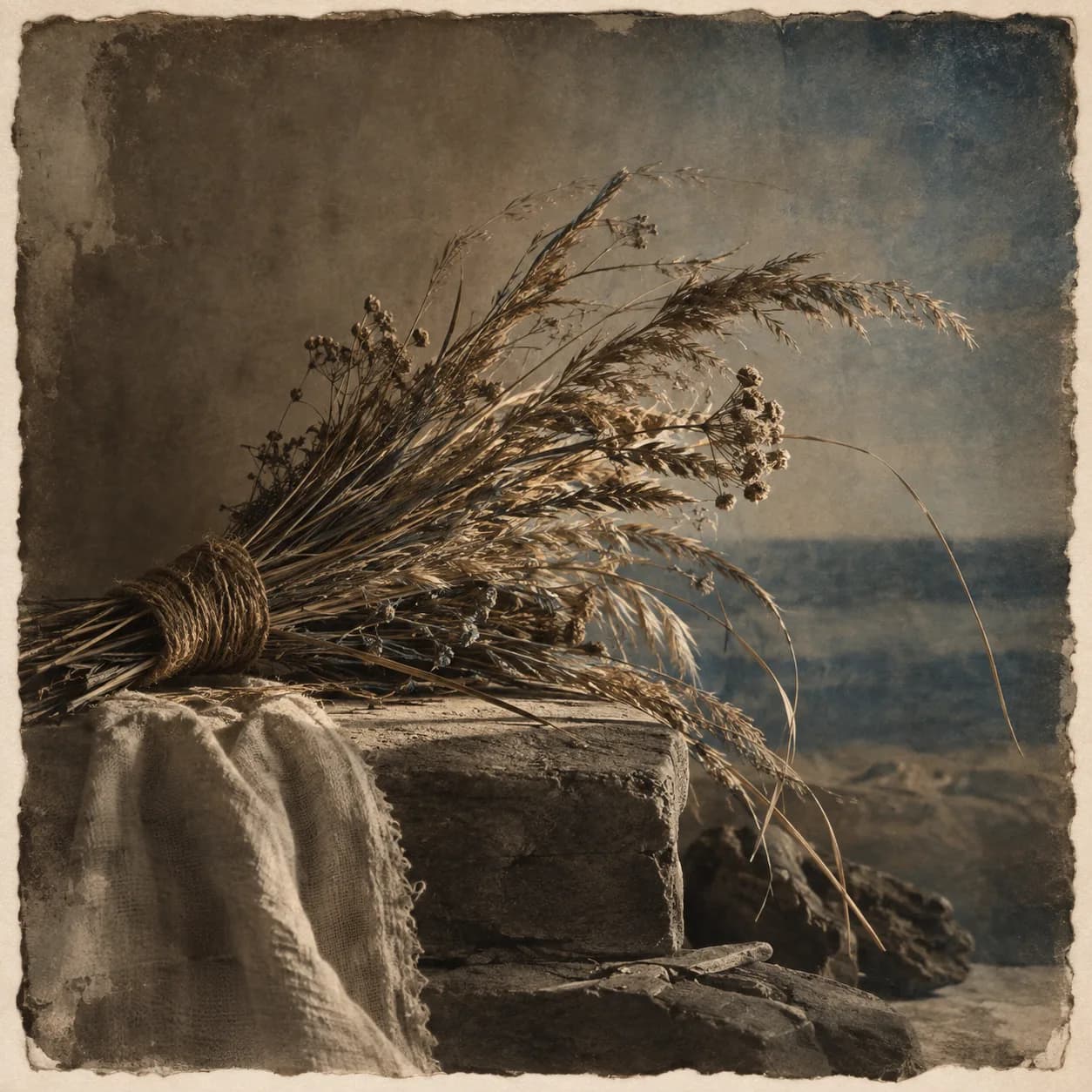
a dried coastal grass bundle
- MEDIUM
- hand-tinted silver gelatin print
- SURFACE
- deckled fiber paper
- SETTING
- quiet print table
- COMPOSITION
- asymmetrical still life
- LIGHTING
- low side light
- PALETTE
- sepia, cream, faded blue
The grass bundle sits asymmetrically on fiber paper with a restrained sepia and faded-blue treatment.
Demo 03
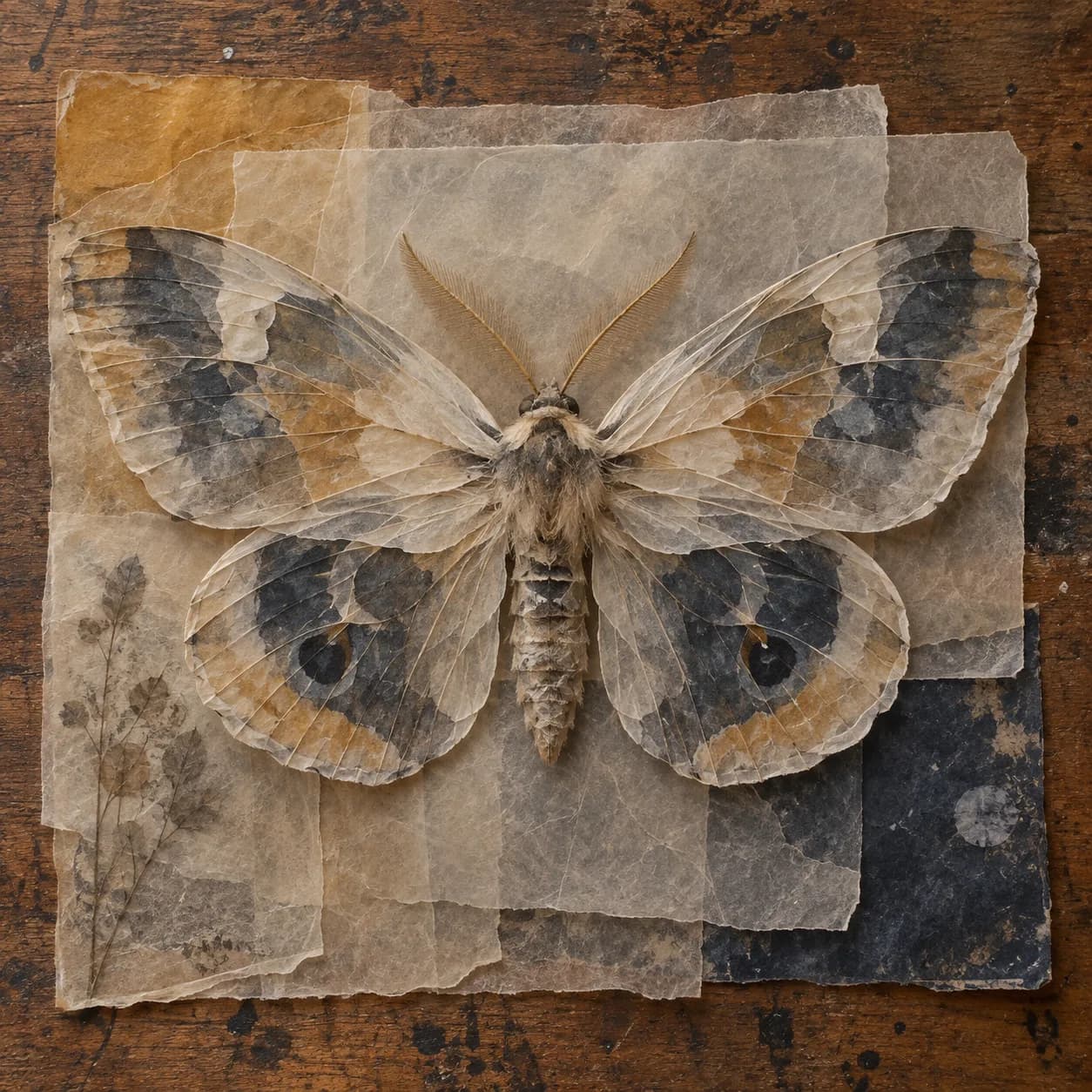
a moth wing study
- MEDIUM
- collage of translucent vellum layers
- SURFACE
- wooden print table
- SETTING
- archival studio
- COMPOSITION
- centered specimen composition
- LIGHTING
- gentle overhead light
- PALETTE
- ochre, smoke gray, indigo
Layered vellum makes the wing study translucent while the wood table grounds the archival process.
Demo 04
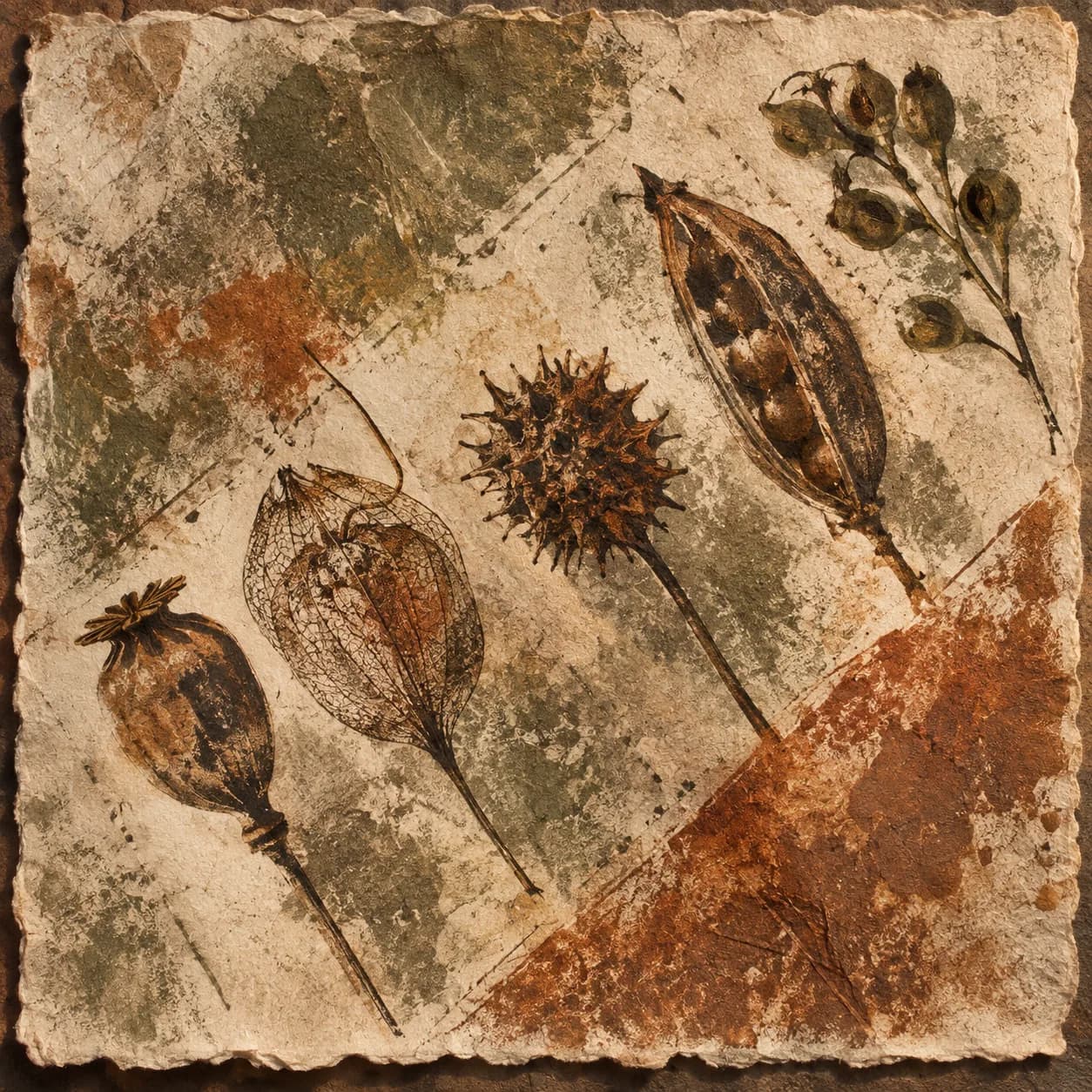
a seed-pod collection
- MEDIUM
- botanical monotype
- SURFACE
- rough handmade paper
- SETTING
- sunlit farmhouse table
- COMPOSITION
- diagonal arranged plate
- LIGHTING
- late afternoon raking light
- PALETTE
- rust, olive, parchment
The seed pods form a diagonal monotype study with raking light catching the handmade paper.
Consistency / testing notes
Specimen recognitionCONSISTENT
Each output keeps the selected botanical or natural subject readable through its artistic process.
Tactile mediumCONSISTENT
Paper, vellum, pigment, and print surfaces remain visible rather than becoming generic digital backdrops.
Period restraintMOSTLY CONSISTENT
The palette and quiet arrangements feel archival, with natural variation in aging and process marks.
All four demos use final master prompt version v1-cyanotype-botanical-study; only declared variable values changed. Four authentic generations were assessed as one set.
Tips for better results
- Choose specimens with strong silhouettes.
- Let the support surface carry part of the period feeling.
- Use the result as visual direction rather than proof of a historical process.
Limitations
- Historical process accuracy is approximate.
- Fine wings, seeds, and edges can vary.
- Check cultural, scientific, and archival claims separately.