

Branding & Mockup
Unboxing Ritual Identity Scenes
A tactile brand-application prompt showing fictional identities through the physical rhythm of opening, handling, and revealing.
Featured real result
What this prompt produced
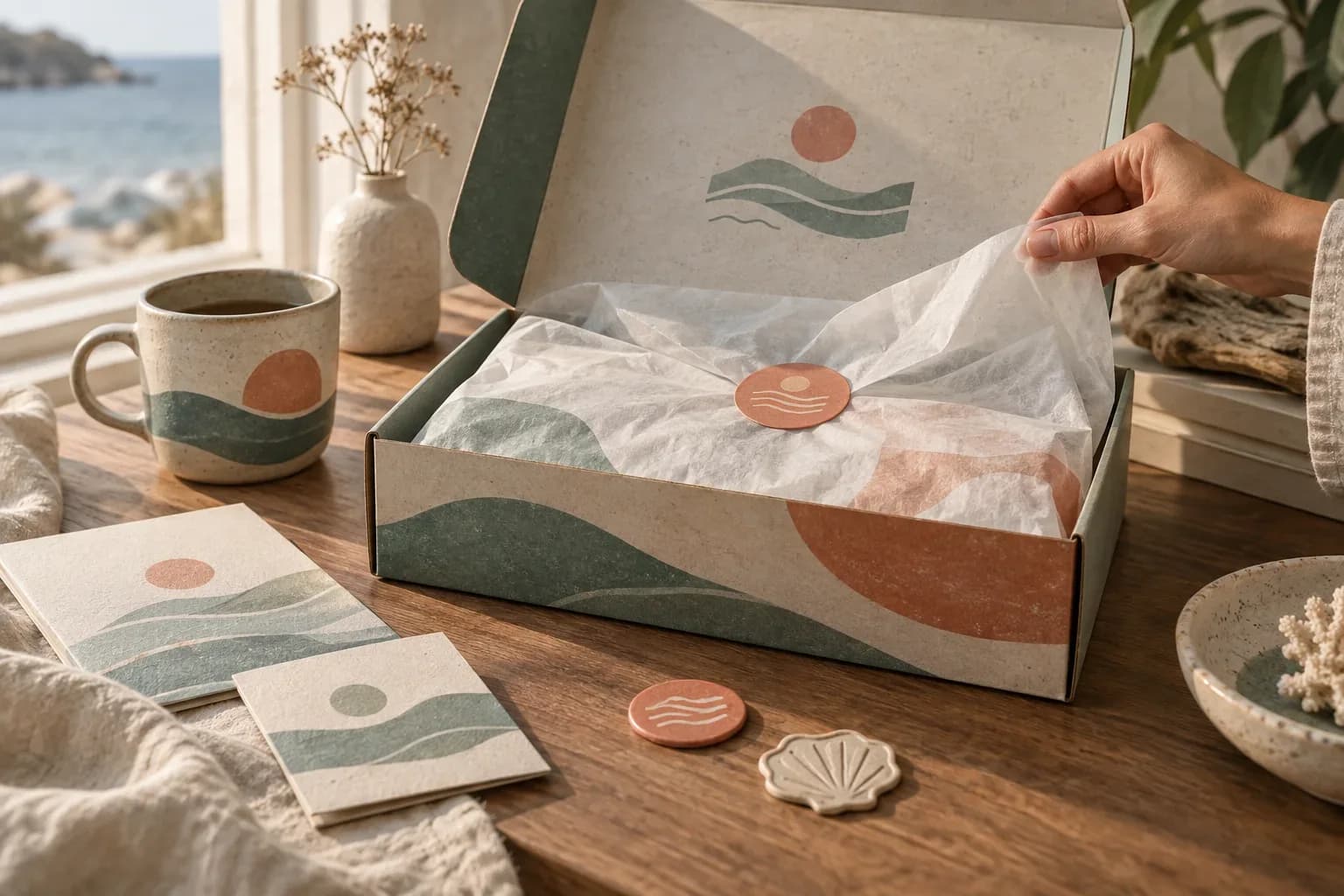
Paper, tissue, and ceramic connect as a calm stationery system while the lifted tissue supplies action.
The master prompt
Create a tactile horizontal 3:2 brand documentation photograph for the fictional identity [IDENTITY] revealed through [UNBOXING_COMPONENTS] during [RITUAL] on [SURFACE] in [SETTING], using [COMPOSITION], [LIGHTING], and [PALETTE]. Show coherent materials, believable object geometry, and abstract non-readable marks only. No real logos, readable text, watermark, or distorted objects.
Visual direction
Style: Tactile brand documentation photography for fictional, non-infringing identity systems.
Lighting: Window, candlelike, north, and cool morning light reveal paper, ceramic, cloth, and metal.
Composition: A physical reveal gives the identity system a human-scale story without relying on text.
Variables
- IDENTITY — fictional identity direction
- UNBOXING_COMPONENTS — physical touchpoints
- RITUAL — opening or handling moment
- SURFACE — staging surface
- SETTING — context
- COMPOSITION — documentation arrangement
- LIGHTING — material light
- PALETTE — identity colors
How to use it
- Use abstract marks and apply final identity assets later.
- Keep components physically plausible and connected to one ritual.
- Review trade dress, accidental text, and object geometry.
Same master prompt, different variables
Demo variations
Demo 01
a fictional coastal stationery studio
- UNBOXING_COMPONENTS
- paper wrap, box, tissue, seal shapes, and ceramic cup
- RITUAL
- a quiet unboxing moment with tissue being lifted
- SURFACE
- a pale workbench
- SETTING
- a sunlit studio
- COMPOSITION
- three-quarter tabletop scene with the package as hero
- LIGHTING
- soft side window light
- PALETTE
- sea green, sand, and coral
Paper, tissue, and ceramic connect as a calm stationery system while the lifted tissue supplies action.
Demo 02
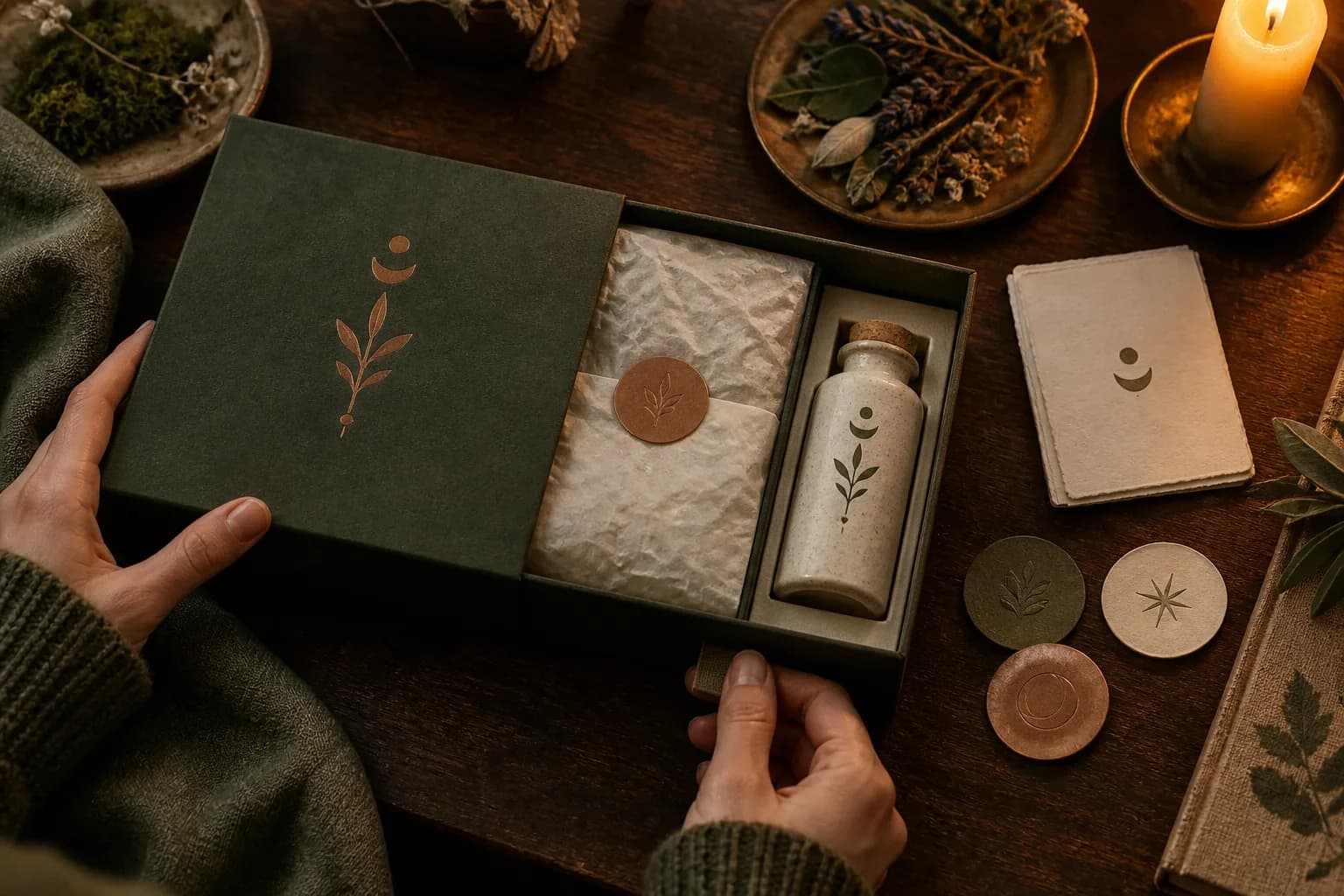
a fictional herbal apothecary
- UNBOXING_COMPONENTS
- drawer box, tissue, ceramic vial, and blank seal shapes
- RITUAL
- a careful unboxing on a dark wood table
- SURFACE
- dark walnut
- SETTING
- a quiet apothecary workspace
- COMPOSITION
- intimate top-down arrangement with one open drawer
- LIGHTING
- warm candlelike side light
- PALETTE
- moss, cream, and copper
The open drawer makes the apothecary reveal readable and the materials feel tactile rather than synthetic.
Demo 03
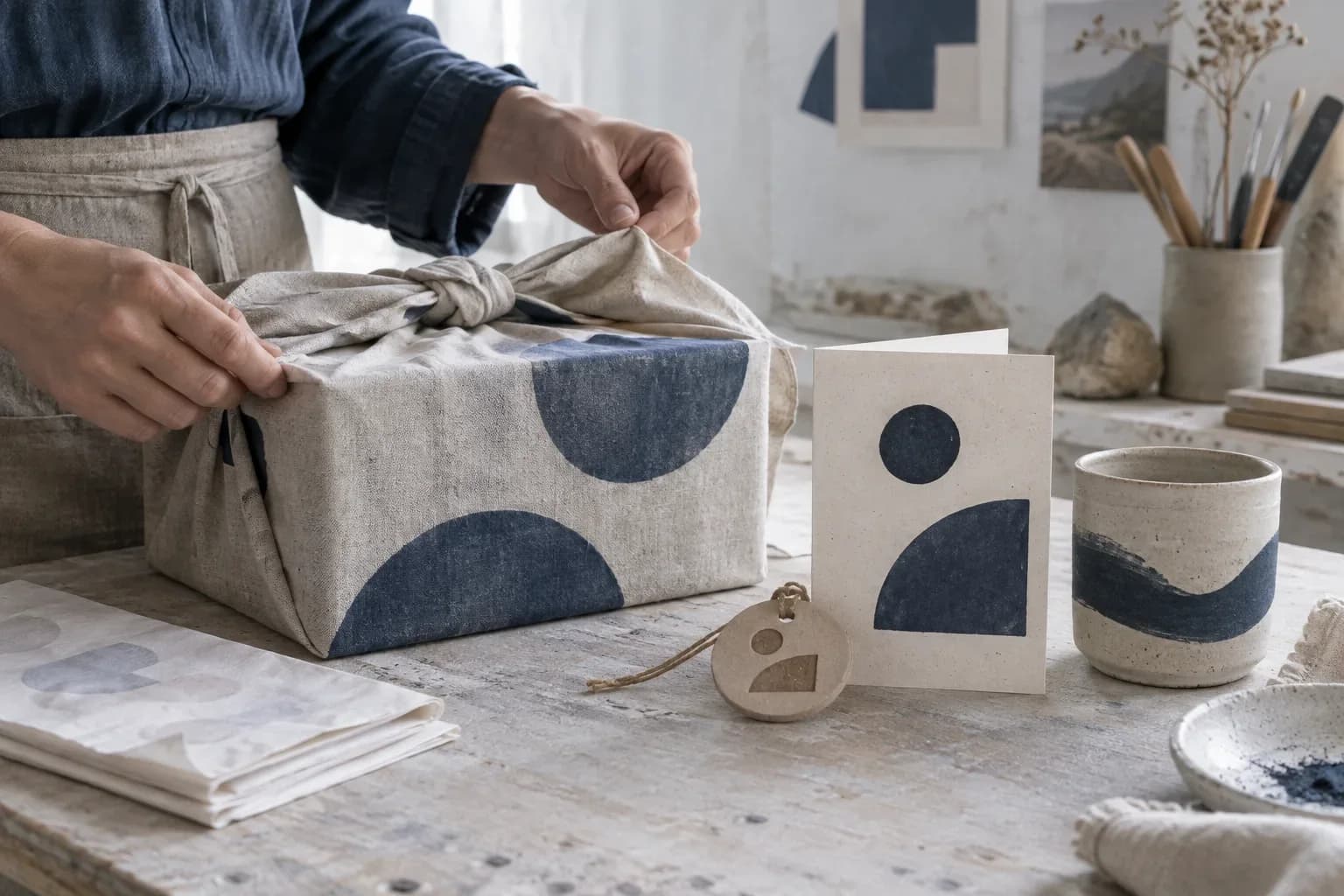
a fictional ceramic studio
- UNBOXING_COMPONENTS
- fabric-wrapped parcel, card shape, clay tag, and cup
- RITUAL
- a slow reveal on a workbench
- SURFACE
- a pale stone worktop
- SETTING
- a maker's studio
- COMPOSITION
- side-on medium view with the wrapped parcel in front
- LIGHTING
- bright north light
- PALETTE
- clay, indigo, and linen
Clay, linen, and paper carry the ceramic studio identity without readable marks.
Demo 04
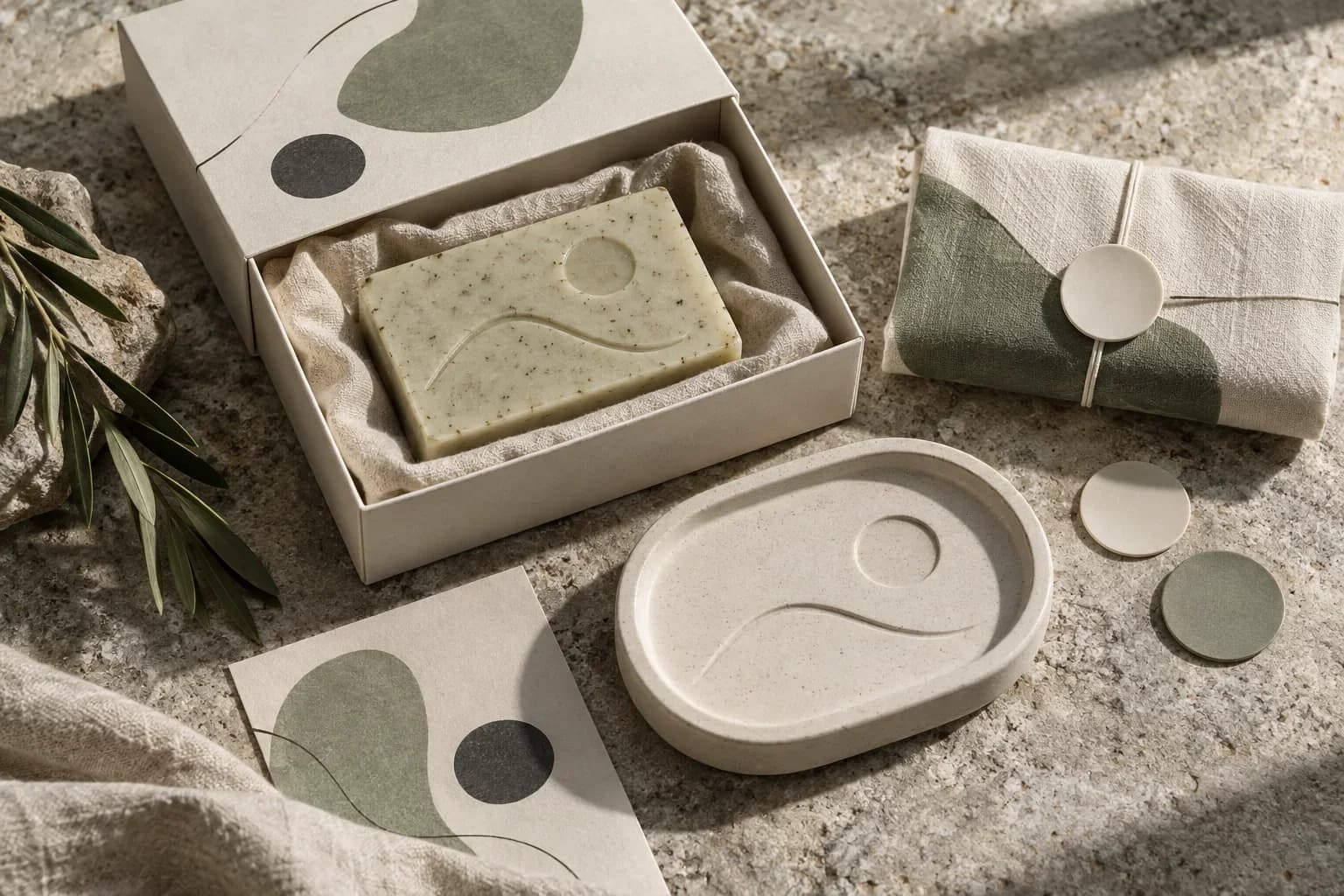
a fictional small-batch tea company
- UNBOXING_COMPONENTS
- nested tins, folded cloth, blank card shapes, and loose tea
- RITUAL
- a tasting ritual beside an open package
- SURFACE
- a stone counter
- SETTING
- a quiet tea room
- COMPOSITION
- wide overhead-to-front view with the open tin as anchor
- LIGHTING
- cool morning light
- PALETTE
- indigo, tea green, and stone
Tins, tea, and cloth create a clear tasting ritual with a consistent fictional palette.
Consistency / testing notes
Identity coherenceCONSISTENT
Each set connects multiple physical touchpoints through shared material and color cues.
Unboxing actionMOSTLY CONSISTENT
Open drawers, lifted tissue, and reveals provide action with different degrees of visibility.
Object geometryCONSISTENT
Packages, tins, cups, and boxes remain believable and non-branded.
All four demos use final master prompt version v1-b7-unboxing-ritual-identity-scenes; only declared variable values changed. Four authentic generations were assessed as one set.
Tips for better results
- Repeat material and color cues instead of invented typography.
- Show one open or handled component as the action anchor.
- Treat generated marks as concept placeholders, not final logos.
Limitations
- Generated marks are not final identity artwork.
- Text, print accuracy, and exact component counts can vary.
- Review trademark, packaging, and production specifications separately.