

Fashion
Movement Trace Editorials
An editorial fashion prompt for garments whose movement, silhouette, and environment create a deliberate visual trace.
Featured real result
What this prompt produced
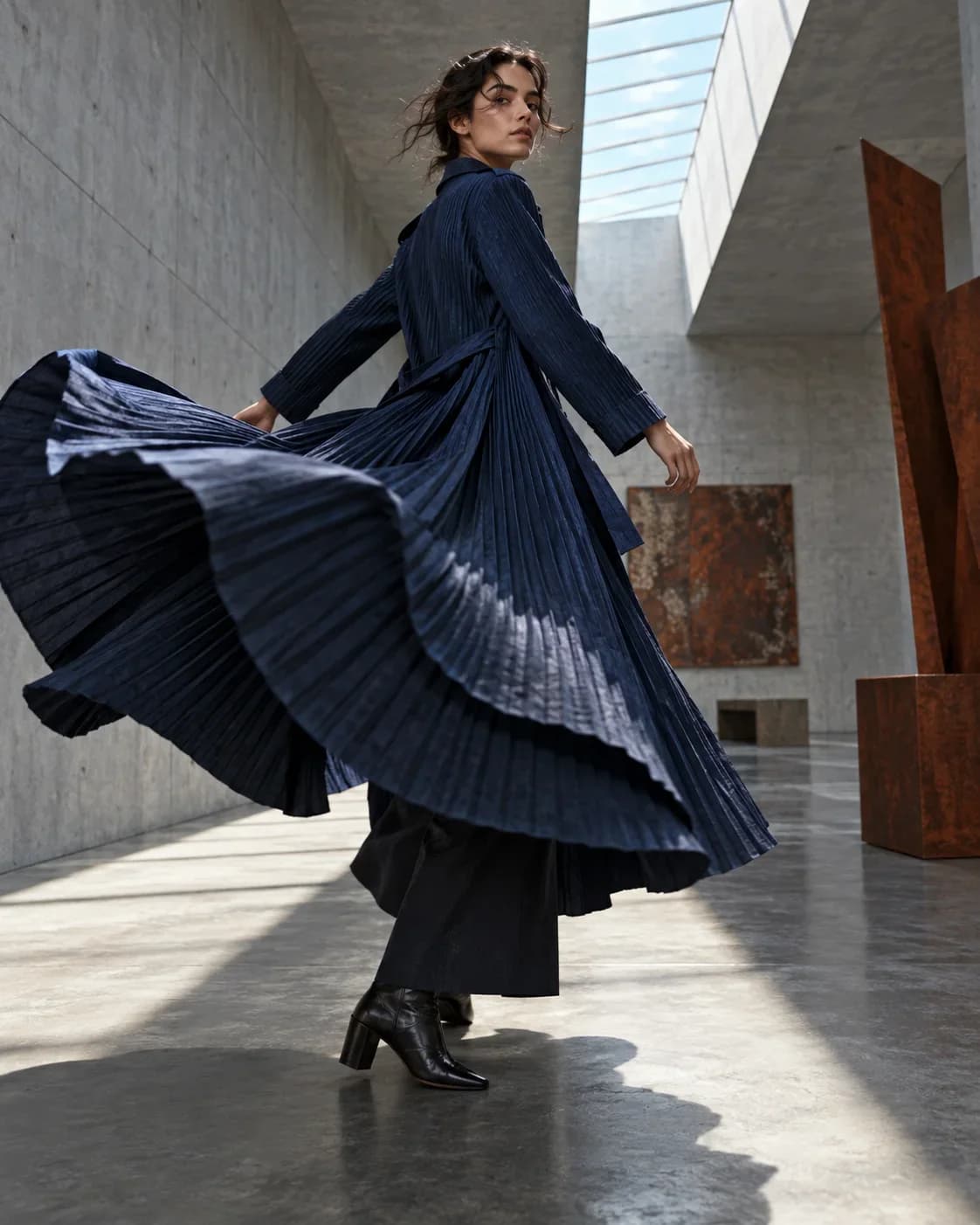
The coat pleats create a clear movement trace while the dancer remains anatomically grounded.
The master prompt
Create a vertical 4:5 editorial fashion photograph of [MODEL] wearing [OUTFIT] moving through [SETTING], captured as [POSE], with [LIGHTING] and [PALETTE]. Make the garment the hero through believable fabric behavior, natural anatomy, and a confident magazine composition. No readable text, logos, watermark, extra limbs, or distorted hands.
Visual direction
Style: Contemporary editorial fashion photography with movement-led garment direction.
Lighting: Hard beams, stage spill, architectural shade, and coastal diffusion create varied fashion atmospheres.
Composition: The pose creates a trace through the frame while the garment remains the first read.
Variables
- MODEL — editorial subject
- OUTFIT — hero garment
- SETTING — movement environment
- POSE — body language and motion
- LIGHTING — directional fashion light
- PALETTE — wardrobe colors
How to use it
- Choose a garment whose material can show controlled movement.
- Keep the model pose simple enough to protect anatomy.
- Review hands, seams, and accidental brand-like details.
Same master prompt, different variables
Demo variations
Demo 01
a poised dancer
- OUTFIT
- a sharply pleated indigo coat
- SETTING
- a concrete gallery with a long skylight
- POSE
- a full-body three-quarter turn with the coat sweeping across the foreground
- LIGHTING
- a hard noon beam with cool bounce
- PALETTE
- indigo, chalk, and rust
The coat pleats create a clear movement trace while the dancer remains anatomically grounded.
Demo 02
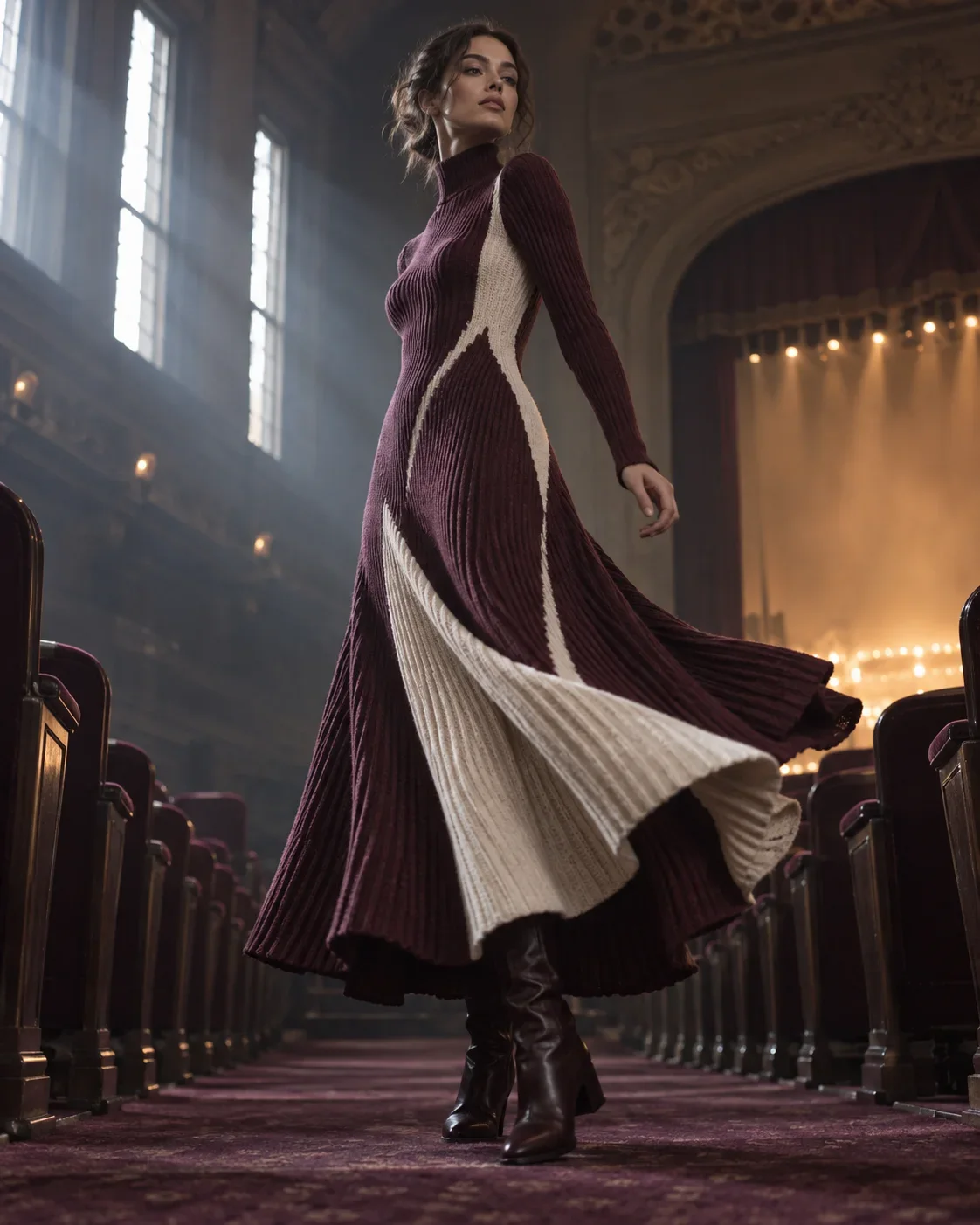
a model in a quiet theater
- OUTFIT
- a sculptural knit dress
- SETTING
- an empty theater aisle
- POSE
- a low-angle measured turn with the knit texture in motion
- LIGHTING
- cool window shafts with warm stage spill
- PALETTE
- plum, cream, and charcoal
The knit surface and aisle perspective make the dress the dominant editorial subject.
Demo 03
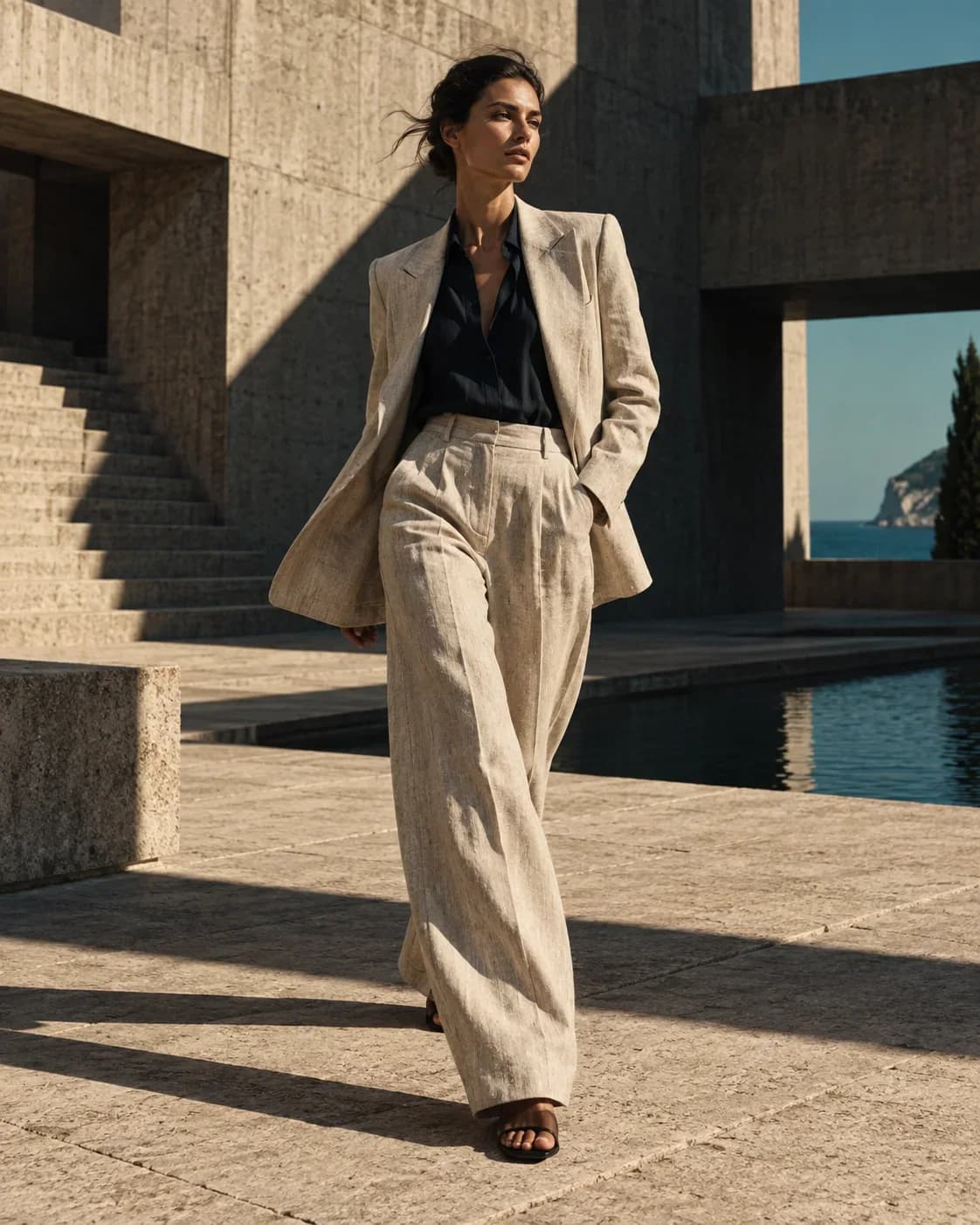
a tailored menswear model
- OUTFIT
- a structured linen suit
- SETTING
- a brutalist courtyard
- POSE
- a composed walking gesture with the jacket edge catching air
- LIGHTING
- late hard sunlight and architectural shadow
- PALETTE
- sand, ink, and teal
The linen suit holds its tailored structure while a walking gesture adds energy.
Demo 04
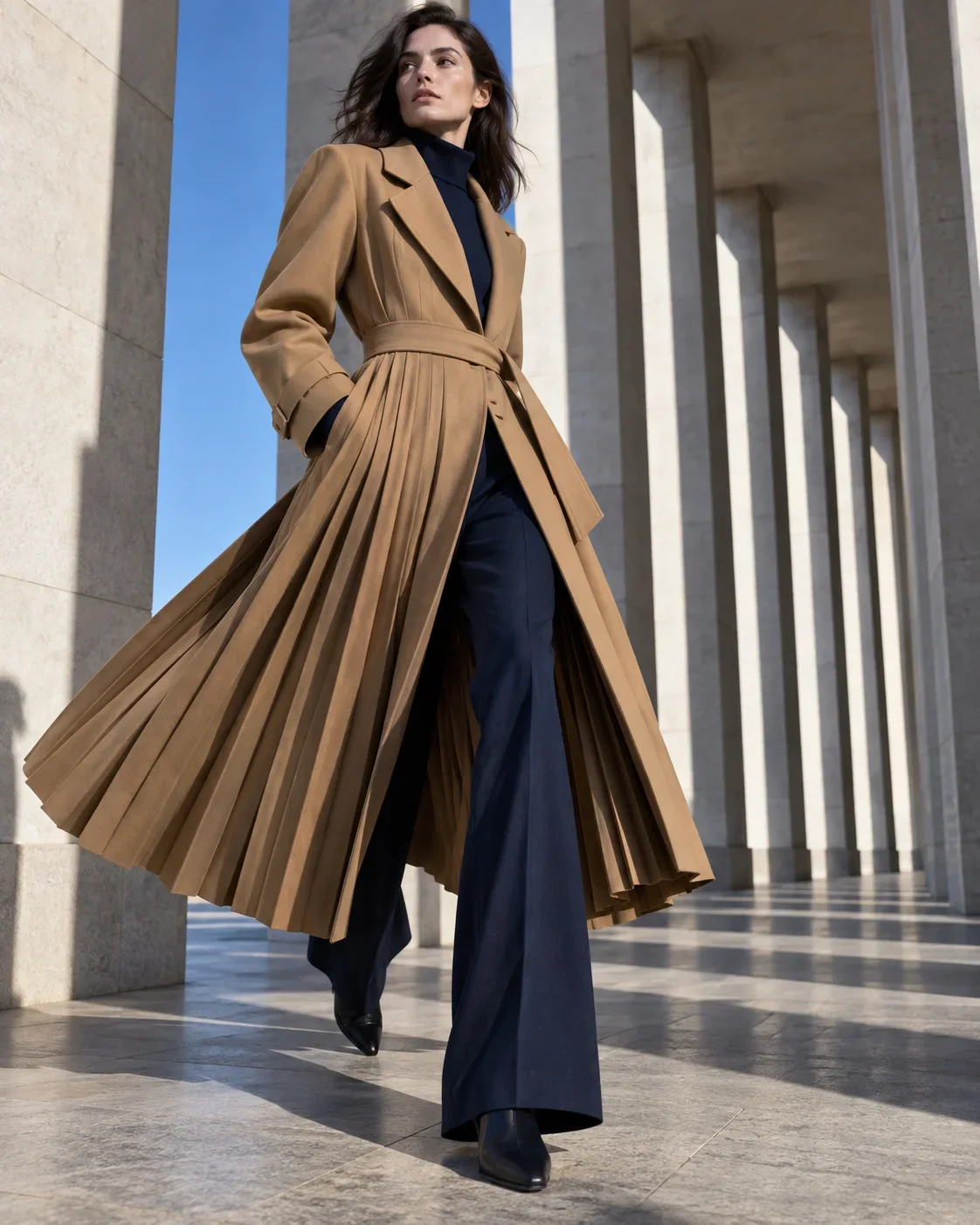
a seated editorial model
- OUTFIT
- a sharply cut wool cape
- SETTING
- a windswept stone overlook
- POSE
- a still seated pose with the cape arranged in a graphic arc
- LIGHTING
- diffused coastal cloud light
- PALETTE
- charcoal, ivory, and muted orange
The cape forms a graphic silhouette against the open overlook without obscuring the model.
Consistency / testing notes
Garment focusCONSISTENT
All four images make the declared garment the dominant visual subject.
Movement languageCONSISTENT
Turning, walking, and arranged motion create distinct but controlled traces.
Anatomy and tailoringMOSTLY CONSISTENT
Silhouettes remain editorially usable with expected small variation in folds and hands.
All four demos use final master prompt version v1-b7-movement-trace-editorials; only declared variable values changed. Four authentic generations were assessed as one set.
Tips for better results
- Use a setting with a directional line for the movement to follow.
- Let fabric motion be measured rather than chaotic.
- Keep final styling and typography outside the generated image.
Limitations
- Exact pleats, seams, and motion may vary.
- Generated fashion is not a production pattern or fit reference.
- Review likeness, styling rights, and commercial suitability.