

Product Photography
Exploded Product Assembly Photography
A reusable prompt for showing a product's construction through a clean, unbranded exploded assembly photograph.
Featured real result
What this prompt produced

The amber vessel and outer shell separate visibly while the limestone gives the assembly a stable base.
The master prompt
Create a square 1:1 commercial photograph of [PRODUCT] showing [ACTION] on [SURFACE] in [SETTING], framed as [COMPOSITION], lit by [LIGHTING], with [PALETTE]. Preserve clear subject hierarchy, believable materials, realistic geometry, and an unbranded premium finish. No readable text, logos, watermark, people, hands, duplicate products, or clutter.
Visual direction
Style: Premium technical product photography with realistic materials and restrained commercial styling.
Lighting: Controlled directional light reveals material differences without harsh reflections.
Composition: A single product and its construction state remain centered with enough negative space to inspect the parts.
Variables
- PRODUCT — product being shown
- ACTION — exploded or separated construction state
- SURFACE — display surface
- SETTING — surrounding environment
- COMPOSITION — camera and arrangement
- LIGHTING — light direction and quality
- PALETTE — coordinated colors
How to use it
- Replace the seven variables with one product and one coherent construction story.
- Keep the master prompt stable while comparing assembly states.
- Inspect geometry, separated parts, and brand avoidance before use.
Same master prompt, different variables
Demo variations
Demo 01
a refillable fragrance bottle with removable outer shell
- ACTION
- the shell hovering beside the inner vessel
- SURFACE
- pale limestone
- SETTING
- quiet warm studio
- COMPOSITION
- centered exploded assembly
- LIGHTING
- soft side light
- PALETTE
- ivory, amber, brushed indigo metal
The amber vessel and outer shell separate visibly while the limestone gives the assembly a stable base.
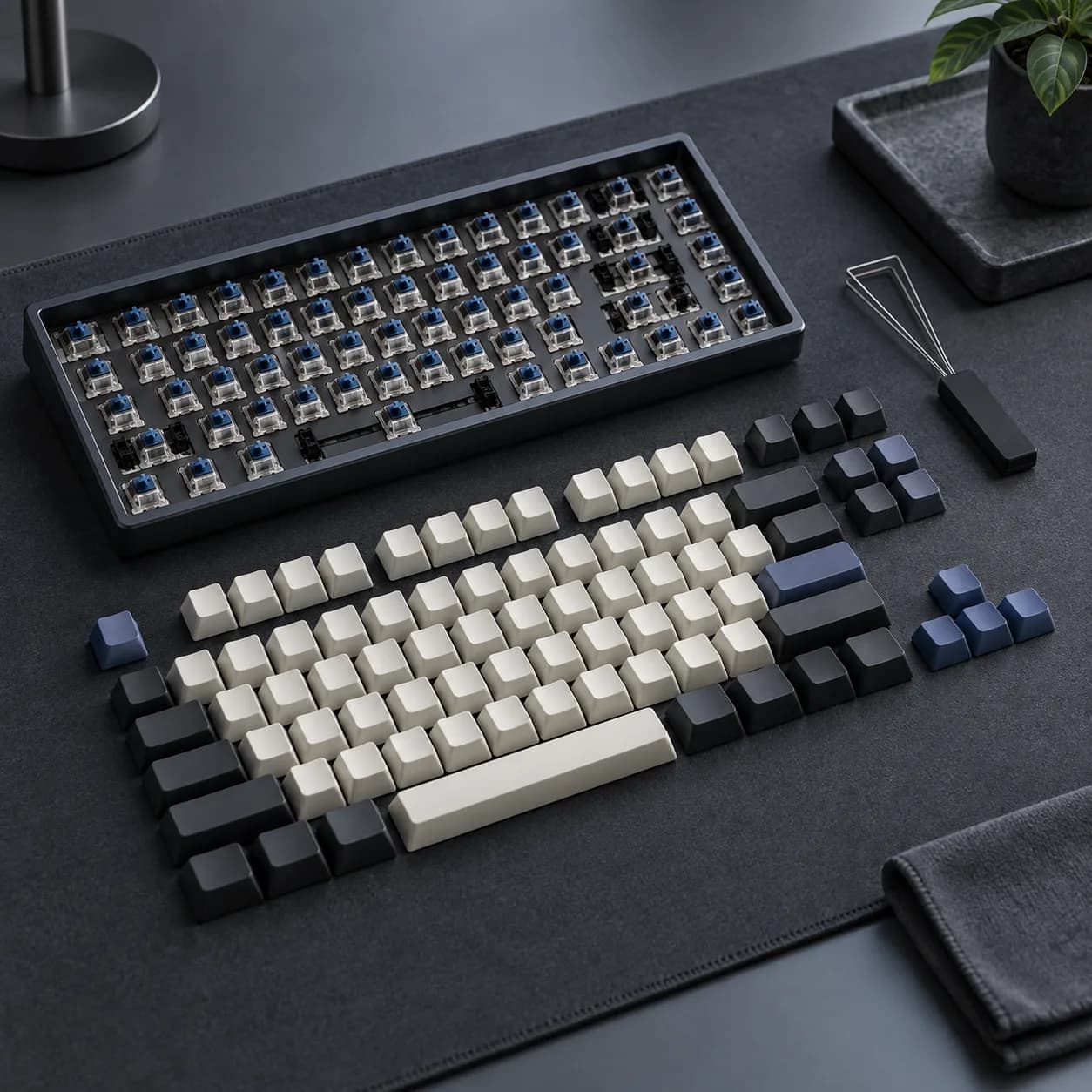
Demo 02
a compact mechanical keyboard
- ACTION
- its keycaps arranged in a precise exploded layout beside the body
- SURFACE
- graphite desk mat
- SETTING
- minimal workbench
- COMPOSITION
- three-quarter technical still life
- LIGHTING
- cool diffused light
- PALETTE
- charcoal, cream, muted indigo
The keyboard parts read as one product system, with the keycaps kept orderly beside the chassis.
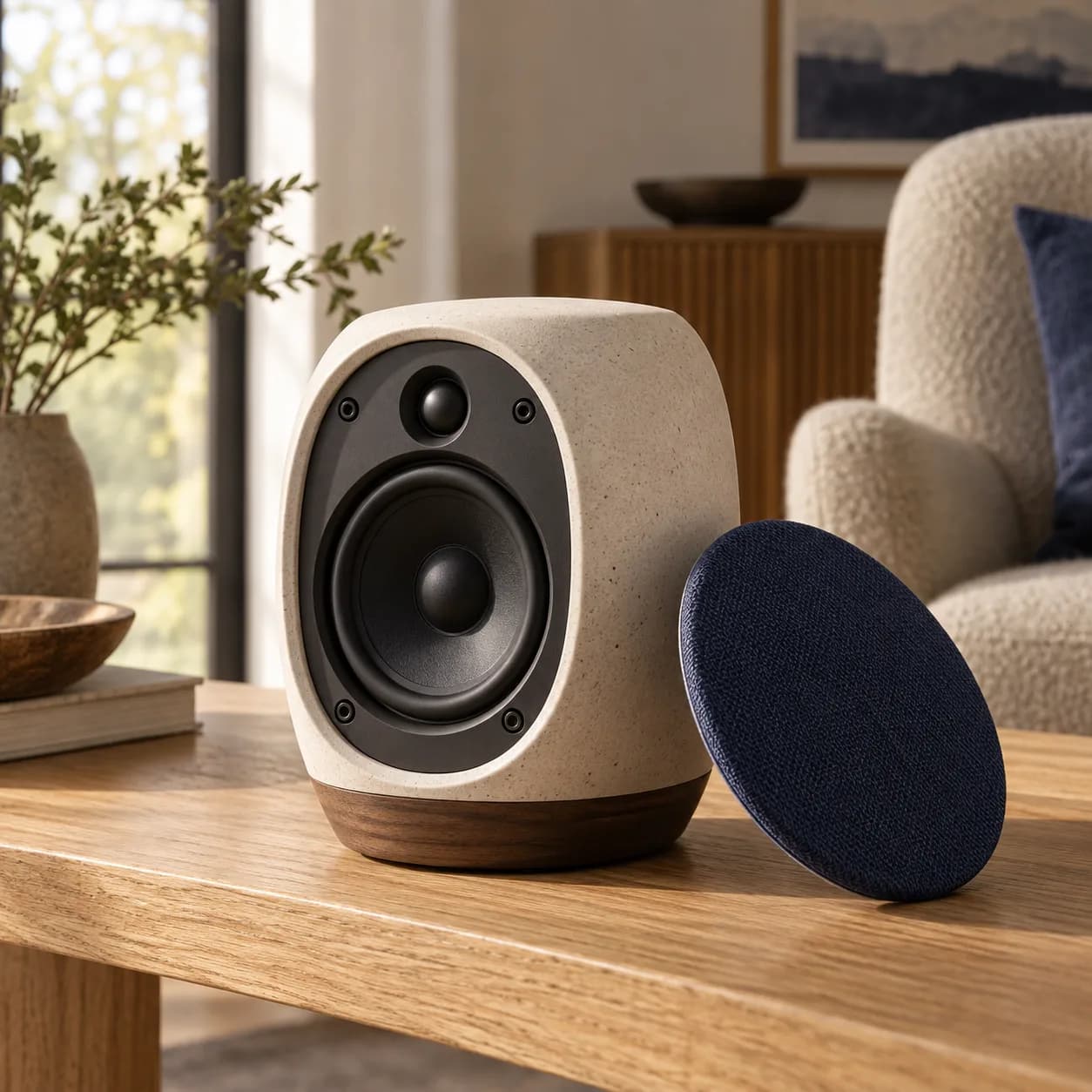
Demo 03
a portable ceramic speaker
- ACTION
- a removable acoustic grille placed beside the speaker
- SURFACE
- natural oak
- SETTING
- calm listening room
- COMPOSITION
- front three-quarter hero arrangement
- LIGHTING
- gentle window light
- PALETTE
- sand, walnut, deep indigo
The grille and ceramic body remain visually related through the calm oak listening-room setting.
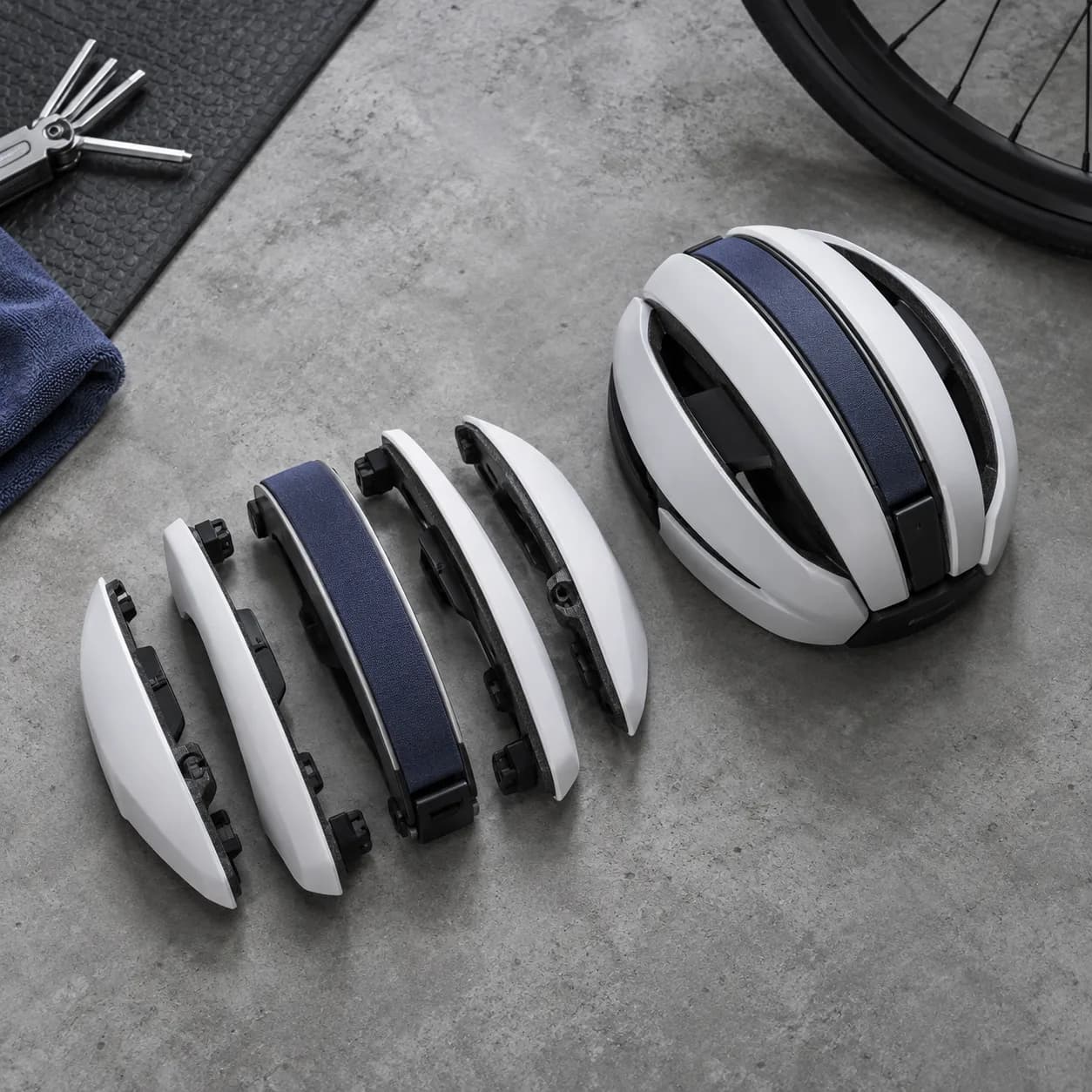
Demo 04
a folding bicycle helmet
- ACTION
- its folded sections aligned beside the closed shell
- SURFACE
- matte concrete
- SETTING
- clean cycle workshop
- COMPOSITION
- diagonal flat-lay assembly
- LIGHTING
- crisp overhead light
- PALETTE
- white, graphite, indigo
The helmet sections create a clear diagonal construction study without adding people or branding.
Consistency / testing notes
Construction clarityCONSISTENT
Each result presents a recognizable product with a visible construction or separation idea.
Material renderingMOSTLY CONSISTENT
Ceramic, metal, plastic, and glass remain distinct, with different reflection behavior across products.
Part geometryMOSTLY CONSISTENT
The main forms are usable, while small components show normal generative variation.
All four demos use final master prompt version v1-exploded-product-assembly; only declared variable values changed. Four authentic generations were assessed as one set.
Tips for better results
- Choose products whose construction is visually understandable.
- Use a quiet surface so the separated parts remain legible.
- Add exact labels later in a controlled design tool if required.
Limitations
- Small parts may shift or merge between generations.
- Reflective and translucent materials can vary in appearance.
- Check that the assembly is physically plausible before commercial use.